
Why Flat Roofs Leak Around Drains, HVAC Units, and Seams
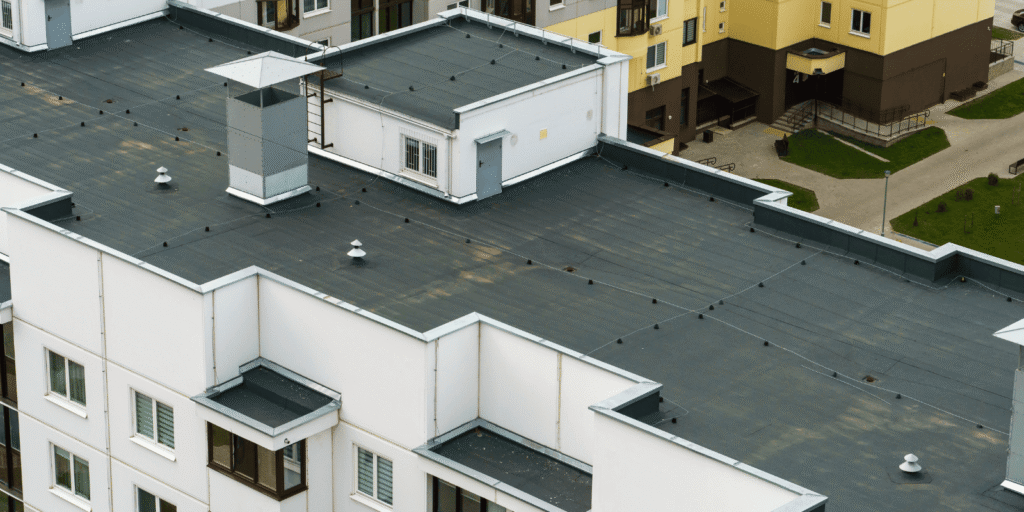
Flat roof leaks start most often around drains, HVAC units, and seams because water pools at low points, heavy equipment cracks the flashing, and seams pull apart from heat and age. These three trouble spots account for the vast majority of leaks on any low-slope roof.
In a climate like Boston’s, with heavy rain, snowmelt, and sharp freeze-thaw swings, flat roof leaks are especially common and often hard to trace. This guide explains why each of these three areas fails, what the warning signs are, and the repair options that keep water out of your building.
Table of Contents
Understanding Flat Roof Leaks
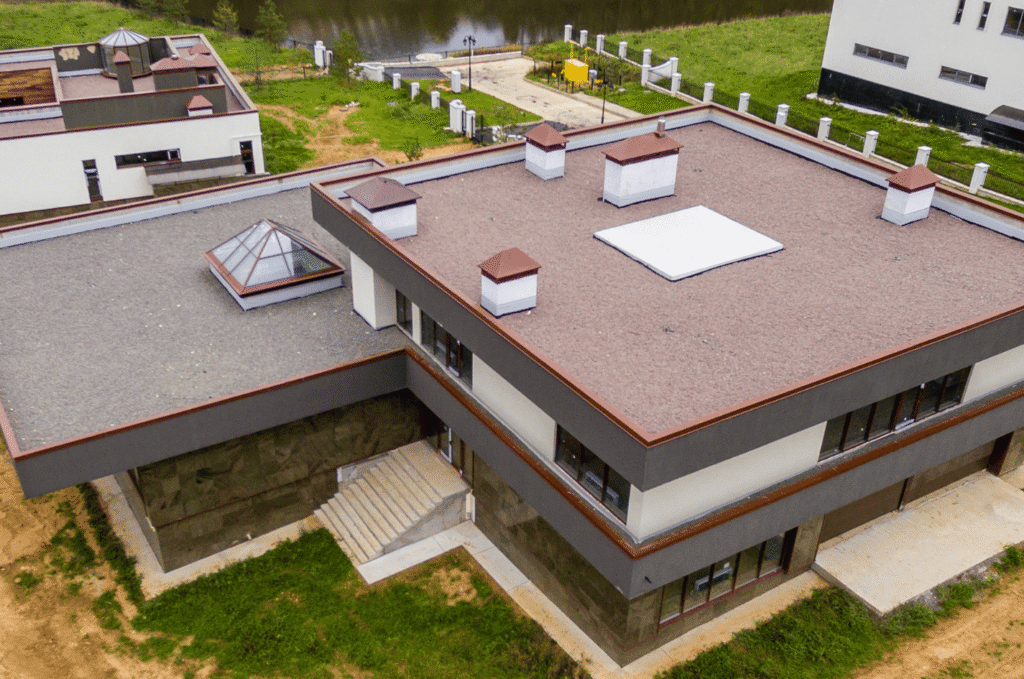
A flat roof does not shed water the way a pitched roof does. Because water lingers on the surface, flat roof leaks tend to form wherever drainage, equipment, or joints create a weak point.
Why Flat Roofs Are Vulnerable
Low-slope roofs rely on a continuous membrane and good drainage rather than gravity. When any part of that system fails, water has time to sit, find the gap, and work its way inside.
That standing water is the core challenge. A pitched roof drains in seconds, while a flat roof holds water long enough to expose every flaw.
The Three Common Leak Points
Drains, HVAC curbs, and seams are where almost all flat roof leaks begin. Each one interrupts the smooth membrane and creates an edge, a joint, or a low spot where water collects.
Knowing these three zones tells you where to look first. Most inspections start at exactly these points for that reason, which saves time and pinpoints the leak faster.
Why Boston Weather Makes It Worse
Boston’s mix of summer heat and winter freeze is punishing for low-slope roofs. Heat dries out adhesives while ice expands inside every crack, and these commercial roofing problems pile up fast.
Each season adds new stress to weak points. That is why flat roof repair in Boston is such a steady, year-round need.
Leaks Around Roof Drains
Roof drains are the lowest points on the roof, so they carry the most water and take the most abuse. A flat roof drain leak is one of the most common failures on any low-slope building, and it drives a large share of all flat roof leaks.
Pooling and Clogged Drains
Water pools around a drain when the surrounding area is uneven or clogged with debris. That standing water adds weight and slowly works through the membrane, a pattern explained in our guide to flat roof drainage problems.
A blocked drain turns the whole roof into a shallow pond. Clearing debris is the first and simplest defense, and it costs far less than repairing a water-soaked deck.
Cracked Drain Flashing Rings
Water also slips past old, cracked rubber or metal flashing rings around the drain pipe. Once that seal fails, water bypasses the drain entirely and enters the roof deck.
This kind of failure is a routine fix during Brookline flat-roof repair and similar local work. A fresh, tight seal restores proper drainage and sends water to the drain rather than into the deck.
Winter Ice Blockages
In winter, ice blocks the drain and forces water back under nearby roof edges. That trapped meltwater refreezes and pries the membrane open a little more each cycle.
Keeping drains clear before the freeze matters most. A blocked winter drain can flood a roof in a single thaw.

Leaks Around HVAC Units
Rooftop equipment is heavy, constantly moving, and full of penetrations. An HVAC roof leak often starts at the seal where the unit meets the roof, making rooftop units a top source of flat roof leaks.
Vibration and Broken Seals
Heavy units shake the roof deck and break the tight seal around the base. Over time that constant vibration opens a gap that rain drives straight into, which is why roofers in Watertown and nearby crews check every curb.
The heavier the unit, the faster the seal wears. Regular checks catch the gap before it leaks and spreads into the insulation below.
Gaps at the Unit Curb
Rain drives into gaps where the unit curb meets the roof curb. Wind pushes water uphill into these joints during storms, defeating a seal that looks fine in dry weather.
These curb joints are easy to overlook. A close inspection during dry weather still reveals the weak spots.
Rusted Flashings and Screw Holes
Old metal flashings rust and let water soak through the screw holes. Each fastener becomes a tiny channel straight into the roof deck below.
Replacing corroded flashing is a core part of EPDM roof repair and membrane work. New flashing seals both the metal and the fasteners, closing off every path water might take.
Leaks Along Roof Seams
Seams are where two sheets of membrane join, and every seam is a potential weak line. Failed seams are a leading cause of flat roof leaks on aging roofs.
Sun and Dried-Out Adhesive
The sun bakes the roof and makes the glue or tape dry out and crack. The same heat that drives flat roof blistering also weakens the adhesive holding seams together.
Once the bond fails, the seam lifts and water follows. Sealing or re-welding the seam restores the barrier and prevents the next round of flat roof leaks.
Wind-Lifted Edges
Strong wind pulls up loose edges along the seams. Once an edge lifts, each gust drives more water underneath and peels the seam back further.
This is common on exposed rooftops, and prompt Dedham roofing team attention stops the spread. A resealed edge holds firm against the next storm.
Trapped Water and Freeze Damage
Rain gets trapped in tiny seam gaps and freezes, making the gaps wider over time. Each freeze-thaw cycle turns a hairline opening into a real leak.
This slow widening is why small seam issues never stay small. Catching them early keeps flat roof seam repair simple, and a timely flat roof leak repair prevents costly interior damage.
Fixing and Preventing Flat Roof Leaks
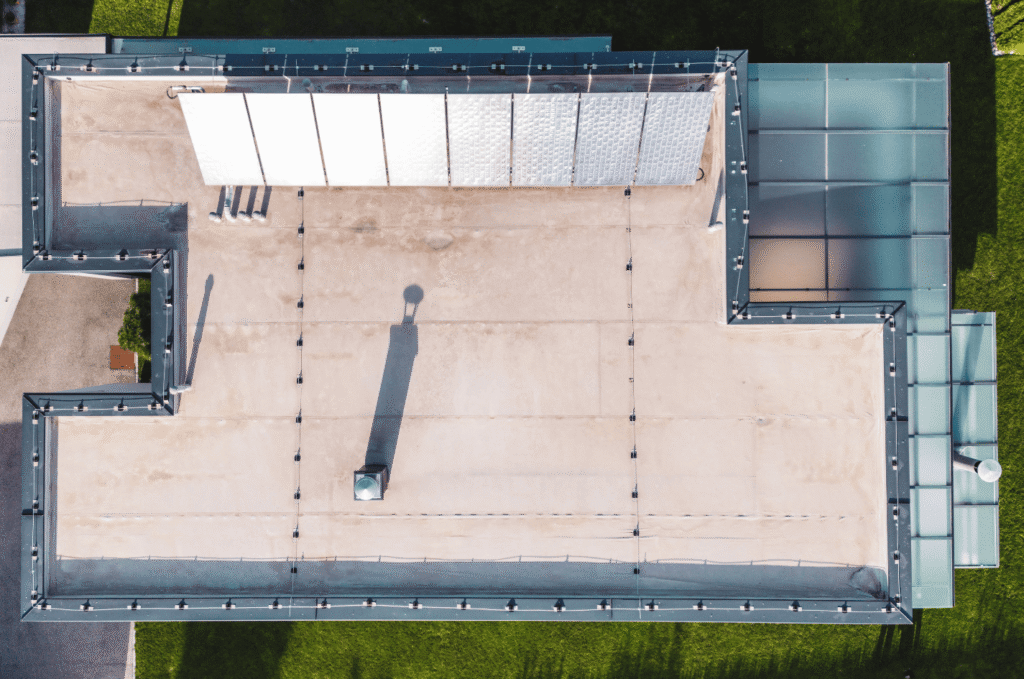
The good news is that commercial flat roof leaks are very fixable once the source is found. The key is addressing the drain, curb, or seam directly rather than just patching the surface.
Professional Repair Options
The right fix depends on the failure, from resealing a drain to re-welding a seam. Skilled Malden roofing crew work traces the leak to its true source and repairs it properly the first time.
A surface patch rarely lasts on a flat roof. Fixing the actual weak point is what stops flat roof leaks for good.
Why Choose CAN Roof Construction
For Boston-area buildings, CAN Roof Construction brings certified crews, honest assessments, and free inspections to every flat roof concern. The team handles drains, HVAC curbs, and seams the right way, so leaks stop at the source instead of spreading.
Schedule a Flat Roof Inspection
Do not wait for a stained ceiling to reveal a hidden leak. If your low-slope roof shows any warning sign, contact our team for a free inspection and a clear plan to keep your building dry.