
What Roofing Material Works Best on Low-Slope Roof Sections?
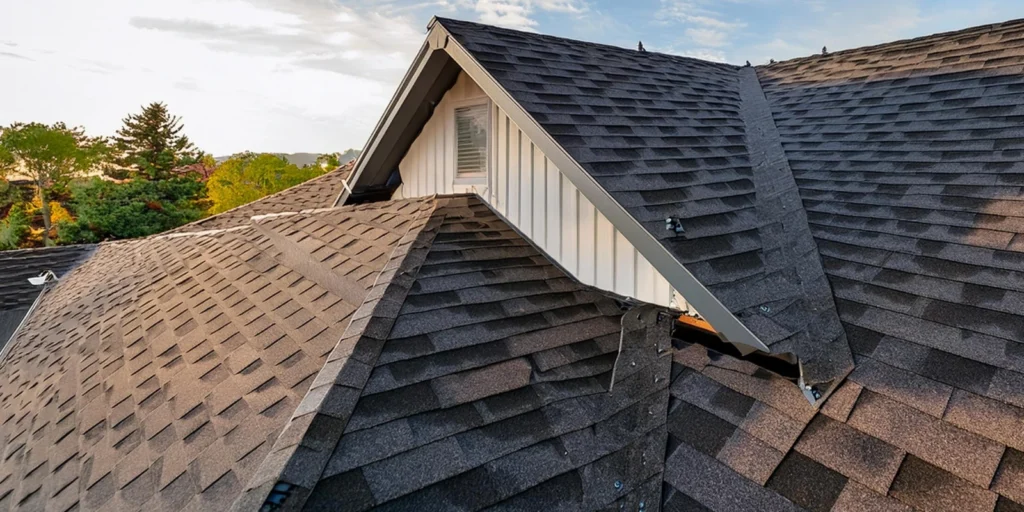
A low-slope roof drains differently than a standard pitched roof, and that difference changes which roofing material actually belongs on it. Asphalt shingles rely on a steep enough pitch to shed water quickly, but on a low-slope section, water moves much more slowly across the surface, so the material has to form a continuous, seamless barrier instead. That’s why porches, additions, garages, and many commercial buildings use a completely different category of roofing than the steep sections nearby.
This guide breaks down what actually works on a low-slope roof, how the leading materials compare, and what to consider before choosing one for your home or building.
Table of Contents
What Makes a Low-Slope Roof Different?
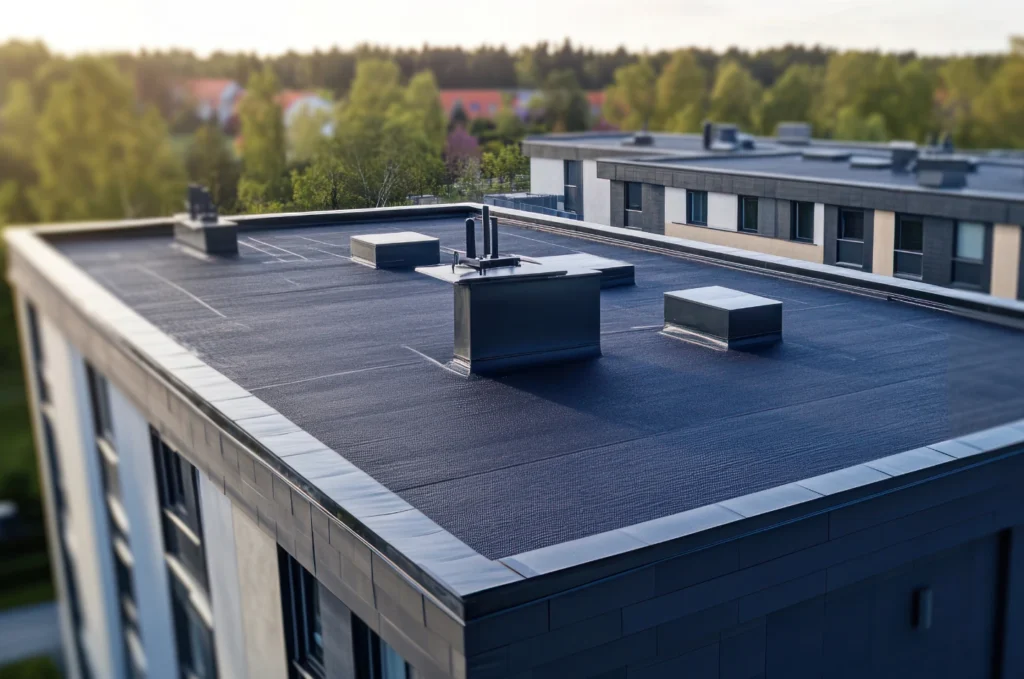
A low-slope roof is any roof section with a gentle pitch, too flat for gravity to quickly clear water the way a steep roof does. Because water sits and moves slowly across the surface, the roofing material has to do the work that slope would otherwise handle, sealing the entire area as one continuous, waterproof layer rather than relying on overlapping pieces.
This is common on porches, dormers, additions, garages, and the roofs of most commercial buildings. Since these areas can’t shed water the way a steep asphalt roof can, they call for a different category of roofing material entirely, one built specifically to handle standing water and slow drainage without leaking. Getting this choice right from the start avoids the recurring leaks and premature failures that come from using the wrong system on the wrong slope.
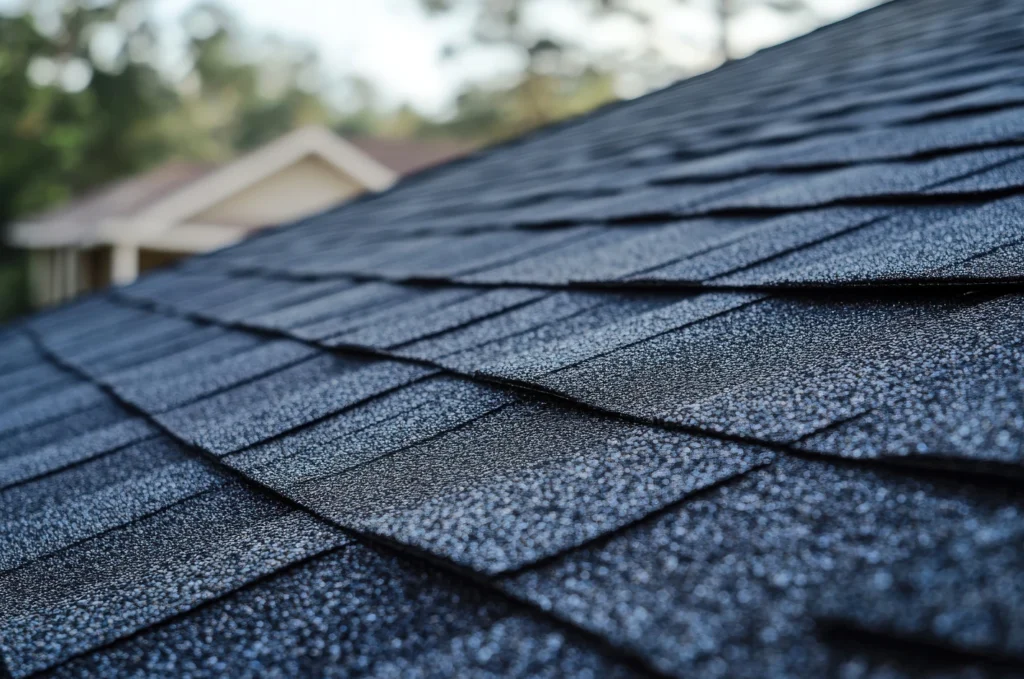
Why Asphalt Roof Shingles Don’t Work on Low Slopes
Asphalt roof shingles don’t work well on low slopes because they depend on a steep enough pitch to let water run off before it can work its way underneath. Shingles are designed as overlapping pieces, and that overlap only stays watertight when gravity is pulling water down and away quickly. On a flatter surface, water lingers at each seam and edge instead of draining off, which eventually leads to leaks.
This is exactly why an asphalt roof is reserved for the steeper sections of a home, while the low-slope portions need a single-ply membrane instead. Mixing the two correctly, rather than using shingles everywhere, is part of what makes a mixed-pitch roof perform well long-term.
EPDM Roof: The Rubber Standard
An EPDM roof is a synthetic rubber membrane, often called a rubber roof, that has been used on low-slope and flat roofs for decades, valued for its flexibility and long track record. It’s applied in large sheets with minimal seams, which reduces the number of weak points where water could get in. EPDM stays flexible even in cold weather, so it holds up well through freeze-thaw cycles without becoming brittle.
Why Homeowners Choose EPDM
- Long service history: One of the most established membrane roofing materials on the market
- Cold-weather flexibility: Resists cracking in freezing temperatures better than many alternatives
- Simple installation and repair in Medfield: Large sheets and straightforward patching keep maintenance manageable
For roofs in a climate with real winters, that cold-weather performance is a major point in EPDM’s favor.
TPO Roof: The Reflective Alternative
A TPO flat roof is a single-ply membrane made from a blend of polymers, typically in white, designed to reflect sunlight rather than absorb it. That reflectivity helps keep the roof and the space below it cooler during warm weather, which is a meaningful advantage for buildings dealing with high summer heat gain. TPO seams are heat-welded, creating a strong, continuous bond across the roof.
Because it’s a newer material than EPDM, TPO has a shorter field track record, but it has become a common choice on commercial low-slope roofs where energy efficiency and a bright, reflective surface are priorities. It performs well in a wide range of settings, especially where cooling costs are a bigger concern than winter flexibility. Many building owners also like that a lighter roof surface can make rooftop maintenance work more comfortable during hot months.
EPDM vs TPO: Which Roofing Material Fits Your Roof?
Neither EPDM nor TPO is universally better, the right roofing material in Boxford depends on your climate, priorities, and how the roof is used. Both are proven single-ply membranes built specifically for low-slope applications, and the differences between them come down to a handful of practical factors.
Key Differences to Weigh
- Climate priorities: EPDM tends to favor cold, heating-dominated climates; TPO’s reflectivity favors buildings with heavy cooling needs
- Color and appearance: EPDM is typically black, while TPO is typically white or light-colored
- Seam type: EPDM commonly uses taped or adhered seams; TPO uses heat-welded seams
- Track record: EPDM has a longer documented history on roofs; TPO is a newer but well-established alternative
A roofing professional can weigh these factors against your specific building and local weather to point you toward the better fit.
Other Flat Roof Material Options
Beyond EPDM and TPO, there are a few other flat roof material choices worth knowing about, though EPDM and TPO remain the most common for most homes and buildings. Understanding the broader category helps put the two leading options in context.
- PVC membrane: Another single-ply option known for chemical resistance, often used where grease or oils are present
- Modified bitumen: A multi-layer asphalt-based system offering added puncture resistance
- Built-up roofing: An older, layered system still used in some applications
For most residential low-slope sections and standard commercial roofs, though, EPDM and TPO cover the vast majority of situations.
Choosing the Right Material for Your Chelsea Roof
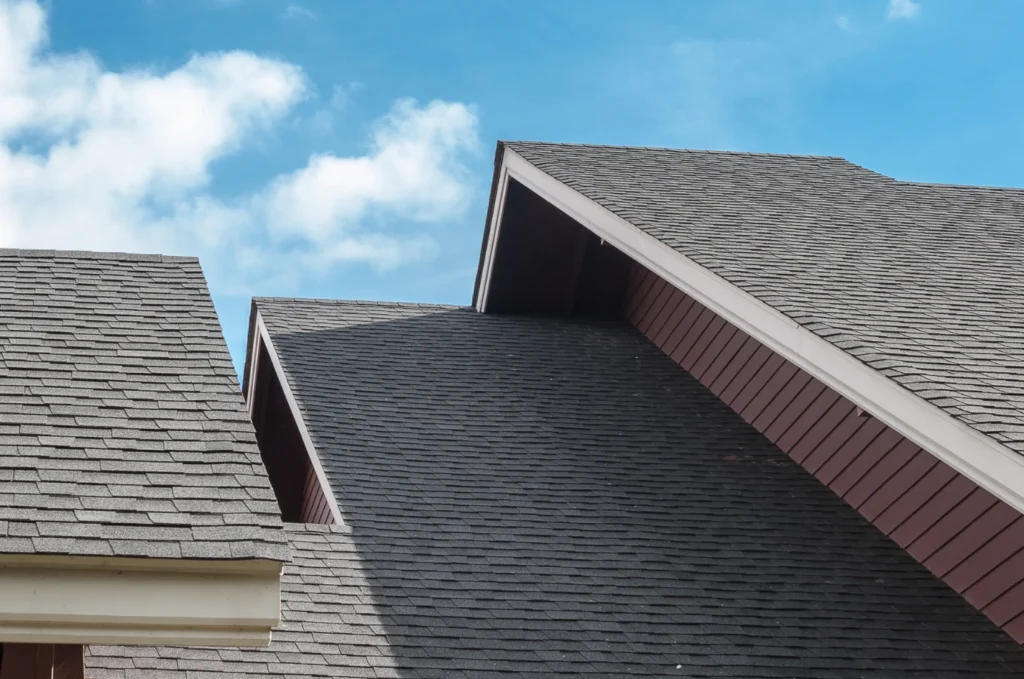
Choosing the right roofing material for a Chelsea roof means weighing local weather, the building’s use, and how the low-slope section connects to the rest of the roof. Cold winters and real temperature swings make flexibility and freeze-thaw resistance genuinely important considerations here, not just theoretical ones.
It also matters how the low-slope section ties into any adjoining steep-slope roofing, since that transition point is where problems most often start if the materials and detailing aren’t handled correctly.
CAN Roof Construction in Chelsea that installs both membrane and shingle systems can make sure the whole roof, not just one section, works as intended.
Contact us to get help choosing the material that actually fits your building and your budget.
One thought on “What Roofing Material Works Best on Low-Slope Roof Sections?”
Comments are closed.