
Roof Damaged? What to Do in the First 24 Hours Before Insurance
When your roof is damaged, act in this order: stay safe, stop water from spreading, document everything, call a roofer and your insurer the same day, and dry out wet areas within a day or two. Each step protects the next, and the first hours matter most for limiting storm roof damage.
This guide follows the clock. It shows what to do in the first hour, hours one to four, the same day, and over the next two days, plus the mistakes that make roof damage worse and how emergency steps lead into permanent repair.
Table of Contents
What Should You Do in the First 24 Hours After Roof Damage?
Start with safety, then water, then evidence. Staying safe comes first because roof damage often comes with slippery surfaces, weakened ceilings, and sometimes downed power lines.
After that, stopping water matters most, since every hour of leaking adds to the roof repair. Documenting come next, before you move or clean anything.
Finally, bring in the professionals. A roofer can inspect and protect the roof, and your insurer can start the claim. The sections below break each stage down by time.
Put Safety First: The First Hour
In the first hour, your job is to avoid injury. A damaged roof is dangerous even when it looks fine from the ground.
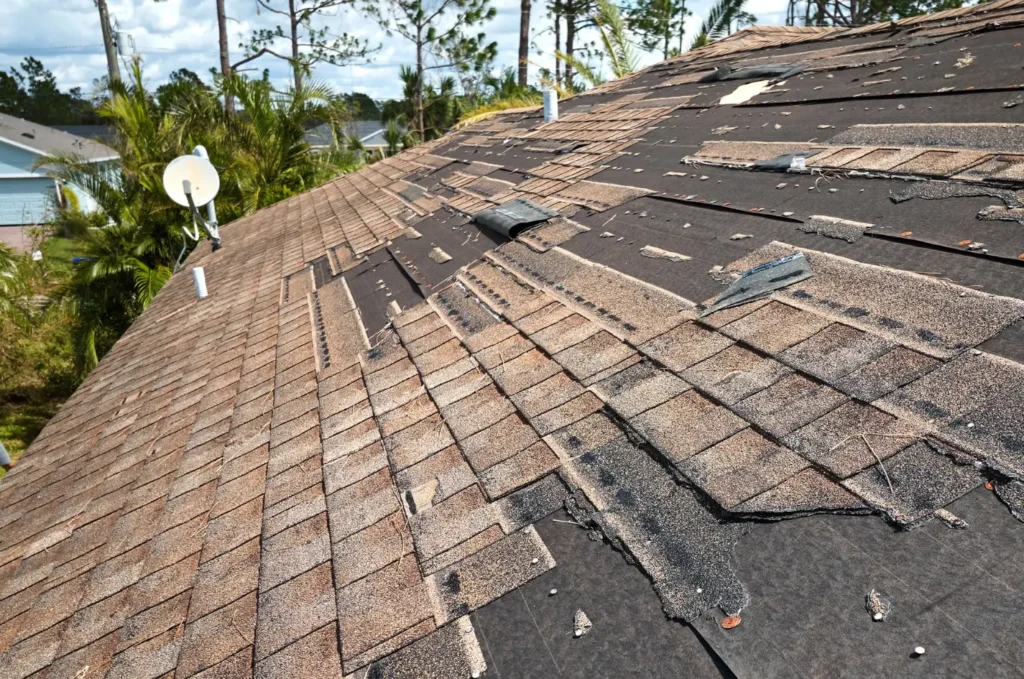
Stay off the roof. Wet, steep, or storm-damaged surfaces cause serious falls, and walking on them can make the damage worse.
Watch for electrical hazards. Stay far from fallen or low-hanging power lines, and avoid standing water near outlets and electrical equipment. If a line is down or near the roof, call the utility or emergency services.
Check the rooms below the damage carefully. Do not enter a room with a sagging ceiling or signs of structural failure, and do not puncture a bulging ceiling. It can hold a large amount of water and may collapse.
Contain Water and Protect Belongings: Hours 1 to 2
Once everyone is safe, limit the water. The goal is to protect the interior until a roofer can protect the roof.
Water often travels before it drips, so the wet spot on your ceiling may be away from the actual opening. Watch the room, not just one stain.
Containing the Leak
- Catch drips: Place buckets, pots, or bins under active leaks, and empty them often.
- Move valuables: Clear furniture, electronics, and rugs out of the drip path.
- Protect the attic: If you have safe access, lay heavy plastic sheeting or a tarp under the damaged area.
- Keep power away from water: Turn off power to affected areas only if you can reach the panel safely.
These steps buy time, but none of them replaces repair.
Inspect and Document the Roof Damage: Hours 2 to 4
Document the damage before you clean up or make temporary fixes. Good records help a roofer diagnose the problem and help your insurer understand what happened.
Start from the ground, where it is safe. Look for missing shingles, bent flashing, broken skylights, damaged gutters, and fallen limbs.
What to Capture
- Exterior damage: Wide shots and close-ups of the roof, gutters, and any fallen debris.
- Interior damage: Ceiling stains, wet floors, damaged belongings, and attic leaks.
- Dates and details: Timestamped photos and video, plus notes on when and how the weather hit.
- Receipts: Keep them for any temporary materials or emergency work.
Photos taken before cleanup are the hardest evidence of roof replacement.
Call a Roofer and Your Insurer the Same Day
Contact a local roofer and your insurance company on the same day. The roofer can inspect the damage and arrange temporary protection, and the insurer can start the claim.
Report the damage promptly, since some policies have strict time limits for filing. Ask about your deductible, how the claim process works, and whether temporary repairs are covered.
Questions to Ask
- The roofer: Can you inspect soon, provide emergency tarping, and give a written report with photos?
- The insurer: What does my policy cover, what is my deductible, and what happens next?
- Both: What should I avoid doing before the adjuster arrives?
Write down every call, name, and claim number so nothing gets lost.
Dry Out the Space Within 24 to 48 Hours
Water that stays in the home can start causing mold within a day or two, a window that is commonly cited by restoration sources. Drying quickly limits the damage.
Open windows where it is safe, and run fans or a dehumidifier. Wet insulation, drywall, and carpet are the main risk because they hold moisture.
Fans alone may not dry wet insulation, and soaked material sometimes has to be removed. If large areas are wet, a roofer can assess the roof, and a water-damage specialist can handle the interior.
What Not to Do After Roof Damage
A few common mistakes turn a manageable problem into a costly one. Most come from rushing or trying to save a step.
Do not climb onto the roof or tarp a wet, steep roof yourself. A poorly secured tarp can tear loose or trap water.
Do not throw away damaged materials before they are reviewed, unless they are hazardous. Do not ignore small stains either, since water can travel and show up far from the leak.
Be careful with pressure sales. Storms attract door-to-door crews, so avoid signing same-day agreements, and read any paperwork before you sign. Compare the offer with a local roofer’s inspection.
From Emergency Steps to Permanent Repair
Emergency steps protect the house, but they do not repair it. Once the roof is stable and the claim is moving, the next question is whether you need a repair or something larger.
Isolated damage, such as a few shingles or a section of flashing, can often be handled with roof repair. Widespread storm roof damage, soft decking, or an aging roof may point toward roof replacement. An inspection decides, and a good roofer will show you the evidence.
The right repair after damage should match the cause, not just cover the stain. If you are searching for roof repair in Boston, look for a roofer who explains what happened, documents it, and gives a clear written plan.
CAN Roof Construction provides roof repair, inspection, and replacement in Boston, with free, no-obligation roof inspections and a 10-year warranty on every project.
Contact us to schedule an inspection and get a clear picture of your roof’s condition.