
Warped and Cracked Deck Board Repair: Deck Restoration
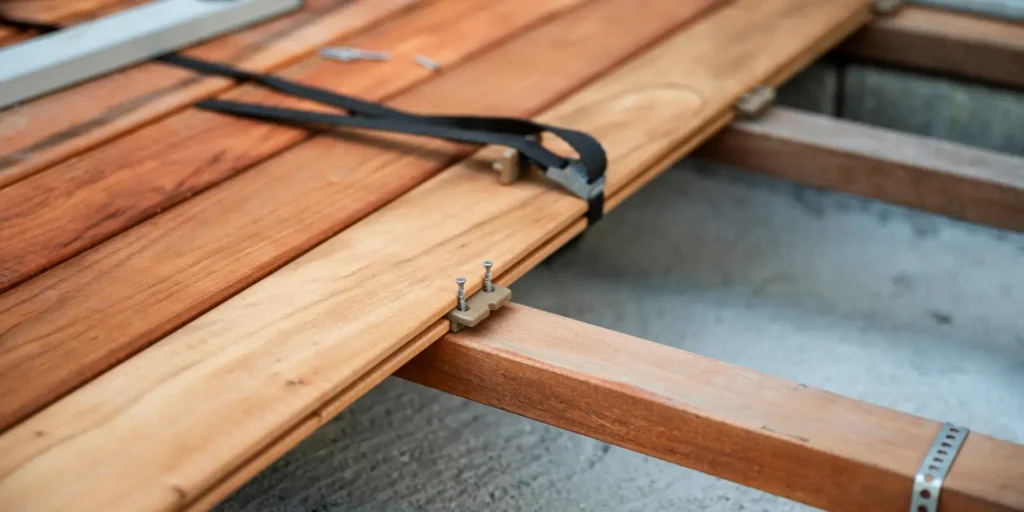
Warped deck boards and cracked deck surfaces are among the most common forms of deck damage that Boston homeowners face after years of exposure to harsh weather. The constant cycle of freezing winters, wet springs, and humid summers takes a toll on wood decking, causing boards to twist, cup, bow, and develop cracks that compromise both safety and appearance.
This guide explains why deck board damage occurs, how to assess the severity of warping and cracking, and the most effective repair solutions available. Whether you need minor repairs or extensive deck restoration, knowing what to expect helps you make informed decisions about protecting your outdoor living space.
Table of Contents
What Causes Warped Deck Boards?
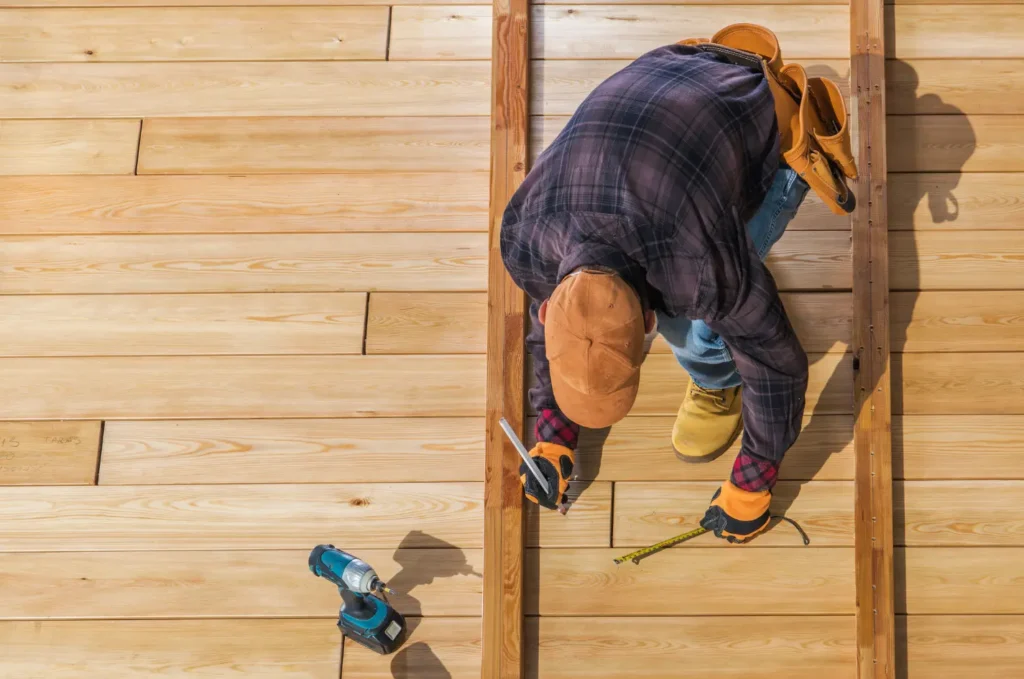
Warped deck boards result from uneven moisture absorption and release as wood expands and contracts with changing weather conditions. When one side of a board absorbs more moisture than the other, the wood fibers swell unevenly, causing the board to twist, cup, or bow. Boston’s climate is particularly challenging for deck materials, with dramatic temperature swings and high humidity levels accelerating this process.
Common causes of warped deck boards include:
- Moisture imbalance: Top surface dries faster than bottom, creating uneven stress
- Poor ventilation: Inadequate airflow under the deck traps moisture
- Direct ground contact: Boards too close to soil absorb excessive moisture
- Sun exposure: Intense UV rays dry the top surface rapidly
- Improper installation: Incorrect fastening allows boards to move freely
- Wood grain orientation: Flat-sawn lumber warps more than vertical grain
- Missing sealant: Unsealed wood absorbs moisture freely
What Causes Cracked Deck Boards?
Cracked deck boards develop when wood loses moisture too quickly or when repeated stress from expansion and contraction exceeds the wood’s flexibility. Surface checks and deeper splits are common forms of deck board damage that worsen over time if left untreated. Cracked deck repair becomes increasingly important as cracks allow water to penetrate deeper into the wood, accelerating decay.
Primary causes of deck cracking include:
- Rapid drying: Hot sun and low humidity cause surface to shrink faster than core
- Freeze-thaw cycles: Water in wood fibers expands when frozen, creating stress
- Age and weathering: Natural breakdown of wood fibers over years of exposure
- End grain exposure: Unsealed board ends absorb and release moisture rapidly
- Fastener stress: Screws or nails too close to edges cause splitting
- Lack of maintenance: Missing protective finish allows UV and moisture damage
How Do You Assess Deck Board Damage Severity?
Assessing deck board damage severity determines whether you need simple deck repair, comprehensive deck restoration, or complete deck replacement. Not all warping and cracking requires immediate action, but understanding the difference between cosmetic issues and structural concerns helps you prioritize repairs appropriately.
Minor Damage: Cosmetic Concerns
Signs of minor damage:
- Surface checks less than 1/8 inch deep
- Slight cupping that does not create tripping hazards
- Hairline cracks that do not extend through the board
- Boards still firmly attached with no movement
Moderate Damage: Repair Needed
Signs of moderate damage:
- Warped deck boards creating uneven walking surface
- Cracks extending partially through board thickness
- Multiple boards showing similar damage patterns
- Boards pulling away from fasteners
Severe Damage: Replacement Required
Signs of severe deck restoration:
- Deep cracks extending through entire board
- Severe warping creating safety hazards
- Soft, spongy wood indicating rot
- Boards splitting apart or breaking
- Structural integrity compromised
What Are the Best Solutions for Warped Deck Board Repair?
The best solutions for warped deck board repair in Someville depend on the severity of warping and the overall condition of your deck. Some boards can be flattened or flipped, while others require replacement. Professional assessment helps determine the most cost-effective approach to deck restoration.
Repair options for warped boards:
- Additional fastening: Adding screws at warp points can pull boards flat
- Board flipping: Removing and reinstalling boards upside down sometimes corrects cupping
- Weighted flattening: Applying moisture and weight to gradually reshape minor warps
- Sanding: Leveling minor surface irregularities with power sanding
- Individual board replacement: Removing severely warped boards and installing new ones
- Complete resurfacing: Replacing all deck boards while keeping sound framing
How Do You Repair Cracked Deck Boards?
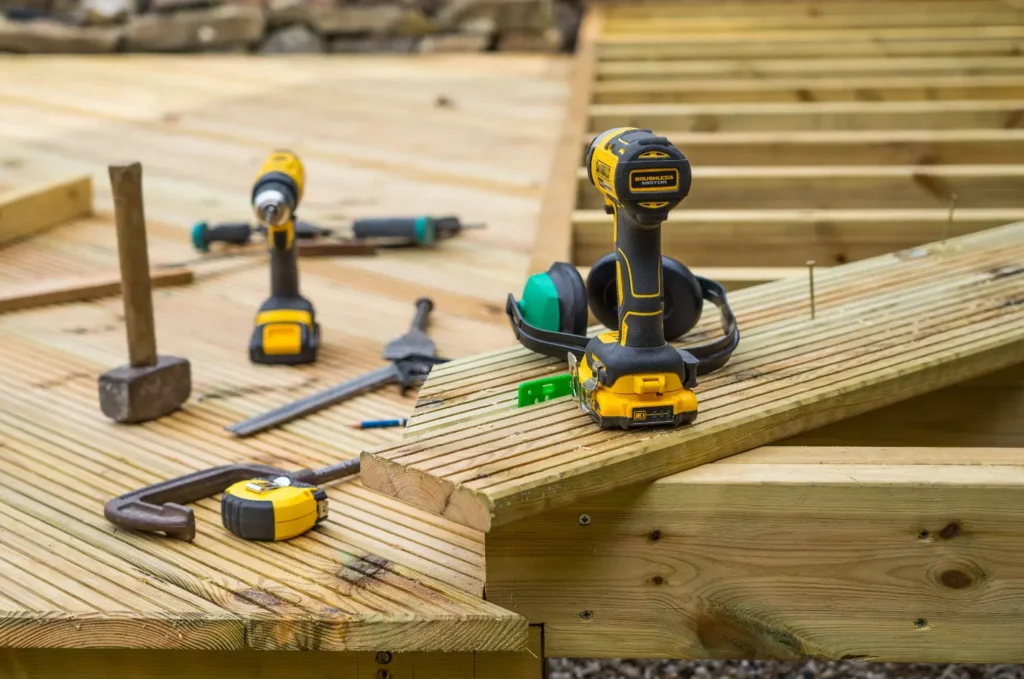
Cracked deck repair in Waltham methods range from simple filling techniques for surface checks to complete board replacement for structural cracks. The right approach depends on crack depth, location, and whether the damage compromises the board’s strength.
Cracked deck repair techniques:
- Wood filler: Exterior-grade filler for shallow surface cracks
- Epoxy repair: Two-part epoxy for deeper cracks that need structural bonding
- Wood glue and sawdust: DIY mixture for color-matched crack filling
- Crack stabilization: Drilling relief holes at crack ends to prevent spreading
- Board replacement: Removing and replacing boards with structural cracks
After repairing cracks, applying quality deck sealant prevents moisture from re-entering and causing future damage in Norwood.
When Should You Consider Deck Replacement vs Repair?
You should consider deck replacement instead of repair when more than 25-30% of boards show significant damage, when structural framing is compromised, or when repair costs approach 50% of deck installation costs for a new deck. Sometimes extensive deck restoration makes sense, while other situations call for starting fresh.
Choose repair when:
- Damage is limited to a few boards
- Underlying structure remains sound
- Deck is less than 10-15 years old
- Repair costs are significantly less than replacement
Choose replacement when:
- Majority of boards show warping, cracking, or rot
- Joists or posts have structural damage
- Deck does not meet current building codes
- You want to upgrade to composite or premium materials
How Can You Prevent Future Deck Board Damage?
Preventing future deck board damage in Wareham requires regular maintenance, proper sealing, and addressing small issues before they worsen. A proactive approach to deck care extends your deck’s lifespan significantly and reduces long-term repair costs.
Prevention strategies include:
- Annual sealing: Apply water-repellent sealant every 1-2 years
- Regular cleaning: Remove debris that traps moisture against wood
- Proper drainage: Ensure water flows away from deck surface
- Adequate ventilation: Maintain airflow under deck to prevent moisture buildup
- End grain sealing: Apply extra sealant to cut board ends
- Prompt repairs: Fix small cracks before they grow larger
- Professional inspection: Annual assessment catches problems early
CAN Roof Construction: Your Deck Repair and Restoration Experts
CAN Roof Construction provides comprehensive deck repair and deck restoration services throughout Greater Boston. From fixing warped deck boards to complete deck installation, our experienced team delivers quality workmanship that protects your outdoor investment. We also offer expert roof repair and roof installation services to protect your entire home.
We serve Boston, Cambridge, Somerville, Brookline, Newton, Quincy, and all Greater Boston communities with professional deck and roofing services you can trust. Let us help you enjoy your outdoor space again.
Restore Your Deck’s Beauty and Safety
Warped deck boards and cracked surfaces do not have to mean the end of your outdoor living space. With proper deck repair and deck restoration techniques, most weather-damaged decks can be brought back to safe, attractive condition. The key is addressing deck damage promptly before minor issues become major problems requiring complete deck replacement.
Contact CAN Roof Construction to schedule your deck installation & repair.