
Roofing for New Construction Projects: Need to Know Details
Building a new home or commercial property represents one of the most significant investments you will ever make. At the heart of protecting that investment lies your roofing system, the critical barrier between your building and the elements.
This comprehensive guide covers everything required for roofing new construction projects. From selecting the right roofing materials to navigating building codes and coordinating installation timelines, we will walk you through each essential step of the new roof installation process.
Table of Contents
Why Roofing Decisions Matter in New Construction
Your new roof represents far more than just a protective covering. The decisions you make during the planning phase of roofing new construction affect everything from your home’s energy efficiency to its resale value decades down the road.
Unlike roof replacement projects where you work within existing constraints, new roof construction gives you complete freedom to design the optimal roofing system for your specific needs.
Key advantages of getting roofing right in new construction include:
- Structural optimization: Designing roof framing specifically for your chosen roofing materials
- Energy efficiency: Incorporating proper insulation and ventilation from the start
- Cost savings: Avoiding expensive modifications or replacements later
- Aesthetic integration: Matching roofing materials perfectly with your home’s architectural style
- Warranty protection: Ensuring manufacturer warranties remain valid through proper installation
Choosing the Right Roofing Materials for Your New Construction
Selecting appropriate roofing materials stands as one of the most important decisions in any new roof construction project. Your choice affects not only the appearance of your building but also its durability, maintenance requirements, and long-term costs. Here are the most popular options for new construction roofing in the Boston area and throughout Massachusetts.
Asphalt Shingles
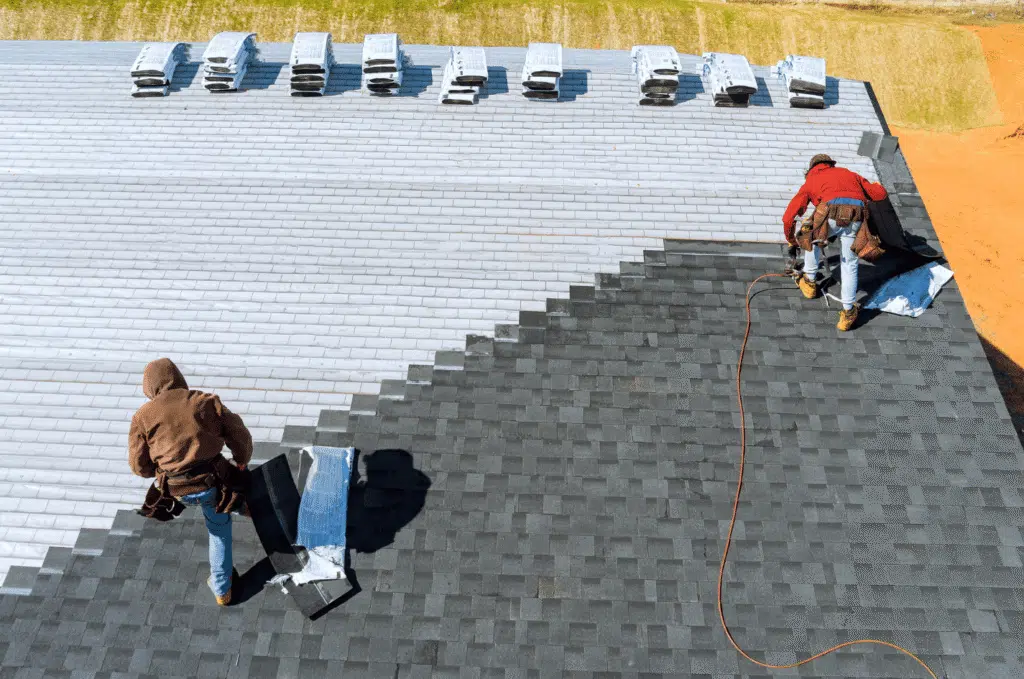
Asphalt shingles remain the most popular roofing material for residential new construction, and for good reason. Modern asphalt shingles provide high wind resistance, fire ratings, and enhanced curb appeal with dimensional profiles that mimic more expensive materials.
For new roof installation projects, asphalt shingles offer the perfect balance of cost-effectiveness and durability, typically lasting 25 to 30 years with proper installation and maintenance.
Metal Roofing
Metal roofing has gained significant popularity in new construction projects thanks to its exceptional longevity and energy efficiency. Standing seam metal roofs and metal shingle systems can last 50 years or more, making them an excellent long-term investment.
Metal roofing materials reflect solar heat, reducing cooling costs during hot Massachusetts summers. They also shed snow efficiently, an important consideration for roofing new construction in our climate. While the initial cost exceeds asphalt, the extended lifespan often makes metal the more economical choice over time.
Slate and Tile Roofing
For homeowners seeking the ultimate in durability and aesthetic appeal, slate and tile roofing materials represent the premium choice. These natural materials can last over a century when properly installed, making them a true generational investment.
New roof construction provides the ideal opportunity to design structural framing capable of supporting these heavier roofing materials. The timeless elegance of slate particularly complements historic architectural styles common throughout Cambridge, Brookline & other established Boston neighborhoods.
Rubber and Flat Roofing Systems
Many new construction projects, particularly commercial buildings and modern residential designs, incorporate flat or low-slope roof sections. These areas require specialized roofing materials like EPDM rubber, TPO, or modified bitumen membranes.
Rubber roofing provides seamless waterproofing, UV protection, and excellent energy savings. When planning roof installation for new construction with flat roof sections, proper drainage design becomes critical to prevent water pooling and extend the system’s lifespan.
Building Codes and Permit Requirements for New Roof Construction
Every roof installation for new construction must comply with applicable building codes and permit requirements. In Massachusetts, the State Building Code establishes minimum standards for roofing construction, while local municipalities may impose additional requirements. Understanding these regulations helps avoid costly delays and ensures your new roof meets all safety and performance standards.
Massachusetts Building Code Requirements
Key code requirements for roofing new construction include:
- Fire ratings: Roofing materials must meet minimum Class C fire rating, with Class A required in some areas
- Wind resistance: Installation methods must withstand design wind speeds for your location
- Ice dam protection: Ice and water shield underlayment required at eaves and valleys
- Ventilation standards: Proper attic ventilation ratios must be maintained
- Energy code compliance: Insulation values must meet current energy efficiency standards
Local Permit Process
Before beginning any new roof installation, you must obtain the proper building permits from your local inspectional services department. In Boston and surrounding communities, permits must be obtained before starting construction and displayed prominently throughout the project. Building inspectors will verify compliance at multiple stages, including framing inspection, insulation inspection, and final roofing inspection. Working with experienced contractors who understand local requirements streamlines this process and helps avoid inspection failures.
The Complete New Roof Installation Process
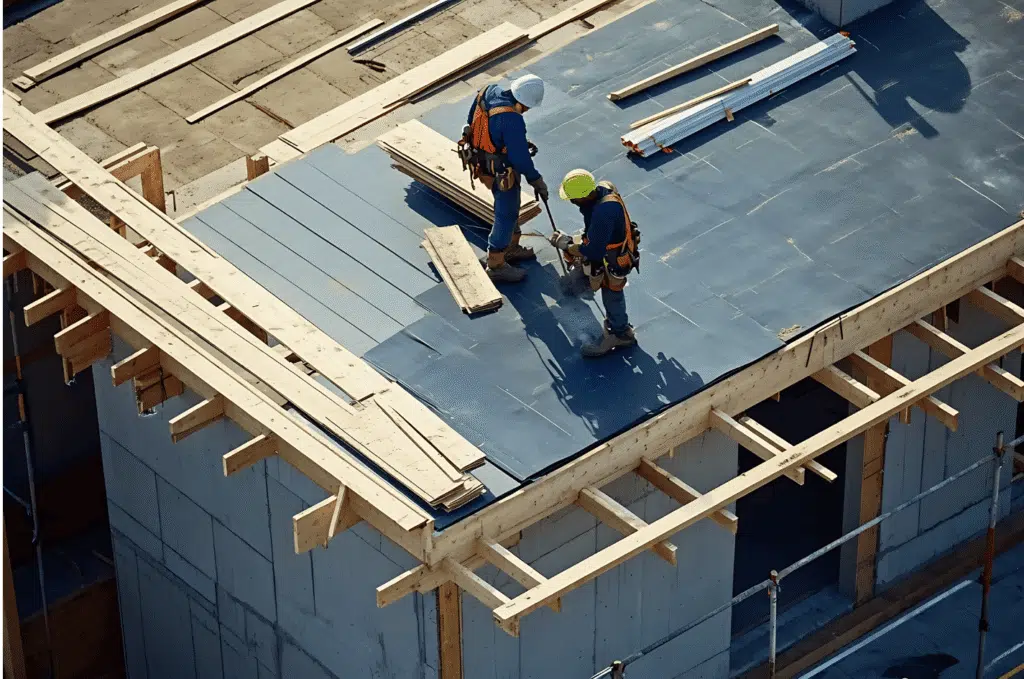
Roof installation for new construction follows a carefully sequenced process designed to create a weather-tight, durable roofing system. Understanding each step helps you coordinate with your contractor and ensure quality at every stage.
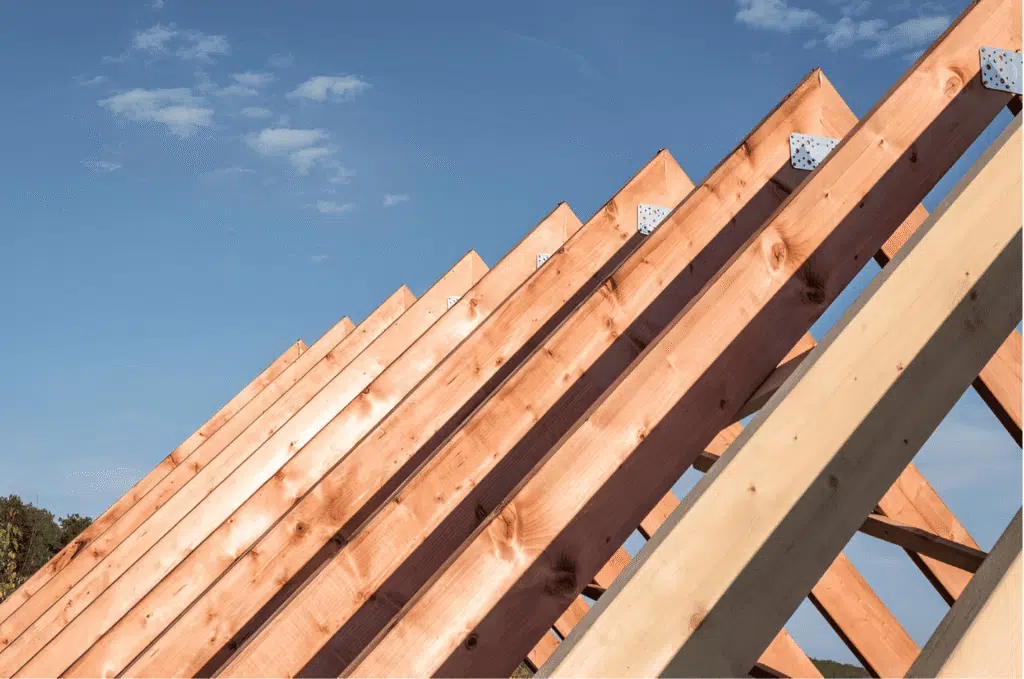
- Roof Framing and Sheathing: The process begins with installing roof trusses or rafters, followed by plywood or OSB sheathing. Proper framing ensures adequate support for your chosen roofing materials and creates the roof’s shape and pitch.
- Drip Edge Installation: Metal drip edge goes along the eaves and rakes to direct water away from the fascia and into gutters, protecting vulnerable wood components from moisture damage.
- Underlayment Application: Ice and water shield membrane protects vulnerable areas like eaves, valleys, and around penetrations. Synthetic or felt underlayment covers the remaining roof deck, providing a secondary weather barrier.
- Flashing Installation: Metal flashings seal transitions around chimneys, skylights, walls, and other roof penetrations. Proper flashing prevents the vast majority of roof leaks.
- Primary Roofing Material: Whether shingles, metal panels, or tile, the main roofing material installs following manufacturer specifications and building code requirements.
- Ridge Ventilation: Ridge vents, combined with soffit intake vents, create proper attic ventilation that extends roof life and improves energy efficiency.
- Final Details and Cleanup: Installation of ridge caps, gutter systems, and thorough cleanup complete the new roof construction process.
Regional Considerations for New Construction Roofing in Massachusetts
Location matters when planning roofing for new construction projects. The Boston metropolitan area presents unique challenges that experienced local contractors understand and address in their installation practices.
Climate Considerations
Boston’s demanding climate requires roofing systems designed to handle extreme temperature swings, heavy snow loads, ice dams, and powerful nor’easters. Roofing materials must withstand temperatures ranging from well below zero to above 90 degrees. Ice dam prevention through proper insulation, ventilation, and ice shield underlayment protects against winter damage common in Massachusetts homes.
Coastal and Urban Factors
Properties near the coast face additional challenges from salt air and higher wind exposure. Communities like Quincy, Hull, and coastal areas require enhanced corrosion resistance in metal components and higher wind-rated installation methods. Urban areas throughout Campello, Cambridge, and Somerville often involve complex access requirements and coordination with neighboring properties that experienced local roofers navigate daily.
Historic District Requirements
Many Massachusetts communities include historic districts with specific requirements for roofing materials and appearance. Areas like Beacon Hill, Back Bay, and historic sections of Cambridge may restrict certain modern roofing materials or require approval for visible home renovations. When planning new roof construction in these areas, early consultation with local historic commissions prevents costly redesigns.
Selecting the Right Contractor for Your New Roof Installation
The quality of your new roof installation depends as much on the installer as the materials. Choosing the right roofing contractor ensures proper installation that protects your investment and validates manufacturer warranties.
Look for these qualifications when selecting a contractor for roofing new construction:
- Local experience: Familiarity with Massachusetts building codes and regional climate considerations
- Proper licensing and insurance: Valid Massachusetts contractor license and comprehensive liability coverage
- Strong reputation: Positive reviews and references from previous new construction projects
- Transparent pricing: Detailed written estimates with no hidden fees
- Warranty offerings: Workmanship warranties in addition to manufacturer material warranties
Why Boston Builders Choose CAN Roof Construction
Planning roofing for your new construction project requires careful consideration of materials, codes, climate factors, and contractor selection. Getting these decisions right from the start protects your investment and ensures decades of reliable performance from your new roof.
CAN Roof Construction has established itself as the trusted partner for roof installation for new construction throughout the greater Boston area. Our 5-star rated team brings certified expertise, premium materials, and a commitment to excellence that builders and homeowners depend on.
Ready to discuss your new construction roofing needs? Contact CAN Roof Construction to schedule your FREE consultation.