
How Clogged Gutters Damage Your Roof: Key Warning Signs
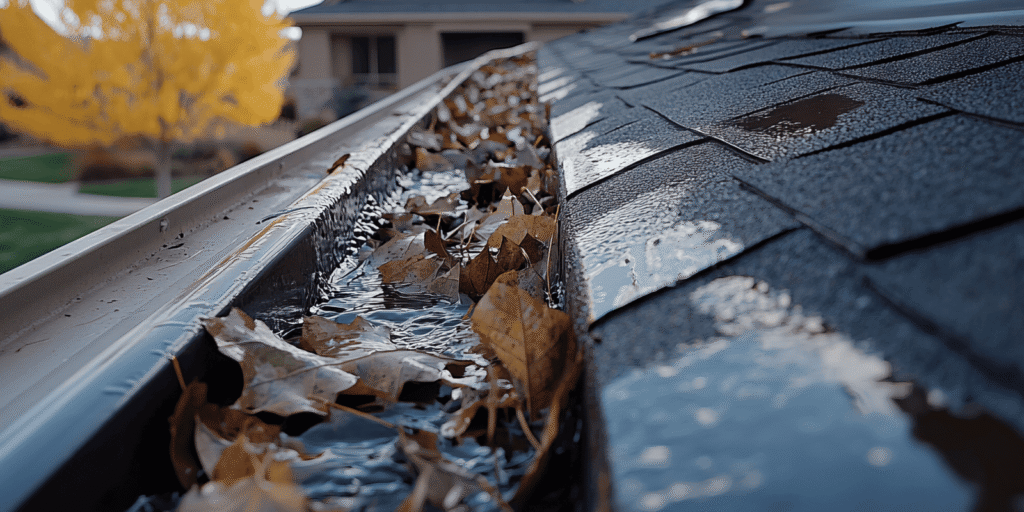
Clogged gutters are one of the most common and most overlooked causes of serious roof damage in Boston homes. When gutters fill with leaves, debris, and standing water, that water has nowhere to go except back onto your roof. Over time, this silent problem can rot your fascia boards, compromise your shingles, and lead to costly interior leaks. If you’re seeing water stains on your ceiling or peeling paint near your roofline, your clogged gutters might already be the cause. This guide walks you through what causes clogged gutter problems, what the warning signs look like, and when it’s time to call a professional.
Table of Contents

What Causes Clogged Gutter Roof Damage in the First Place?
Clogged gutter roof damage usually starts small and builds up gradually. Most homeowners don’t notice a problem until water has already worked its way into the roof structure. Boston’s heavy rain, ice, and leaf drop mean your gutters deal with debris year-round, making regular maintenance essential.
Debris Buildup and Blocked Drainage
Leaves, twigs, and dirt collect in gutters season after season. Once a clog forms, rainwater pools along the roof edge instead of draining through the downspout. That standing water causes wood to absorb moisture, shingles to lift, and rot to develop before you can see it from the ground.
Homeowners dealing with gutter overflow issues often discover that a simple drainage problem has quietly turned into serious clogged gutter roof damage.
Ice Dams in Winter
In colder months, clogged gutters are a direct cause of ice dams. When water can’t drain, it freezes along the roof edge, expands, and pushes up under the shingles to break the waterproof seal. Once an ice dam forms, meltwater backs up and drips into your attic or walls.
Homeowners in Brookline facing roof damage see this pattern every winter without realizing clogged gutters are the root cause.
Fascia and Soffit Rot
When clogged gutters overflow, water hits the fascia board directly, the wooden trim running along the edge of your roof. Fascia rot spreads quickly to the soffit and the roof deck underneath, giving insects and moisture easy entry points into your home.
This is one of the most common clogged gutter problems and one of the most expensive to fix when it’s ignored through multiple seasons.
Key Signs of Clogged Gutter Roof Damage You Shouldn’t Ignore
Spotting signs of clogged gutter roof damage early can save you thousands of dollars. Most warning signs are visible from the ground or during a basic exterior check. By the time you see a ceiling leak, water has already traveled through multiple layers of your home’s structure.
Water Stains on Ceilings and Walls
Water staining near exterior walls or in the attic is one of the most obvious signs of clogged gutter problems. These stains appear as yellow or brown blotches that grow after heavy rain, meaning water has been pooling on your roof long enough to penetrate the underlayment.
A professional Cambridge roof inspection can confirm whether clogged gutters are the culprit before the damage spreads further.
Sagging or Pulling Gutters
Standing water and soaked debris make gutters extremely heavy. That weight pulls them away from the fascia or causes them to sag in the middle, creating gaps where water pours directly onto the roof edge and foundation.
Sagging gutters are a clear signal that residential gutter repair is needed before the damage to your roofline gets worse.
Shingle Granule Loss Near Roof Edges
Check the ground near your downspouts after rain. Dark, gritty granules that look like coarse sand mean your shingles are deteriorating from constant moisture at the roof edge caused by clogged gutters.
Once granules are lost, shingles crack and allow water directly into the roof deck below, turning clogged gutter problems into full roof damage.
How Clogged Gutter Problems Damage Your Roof System
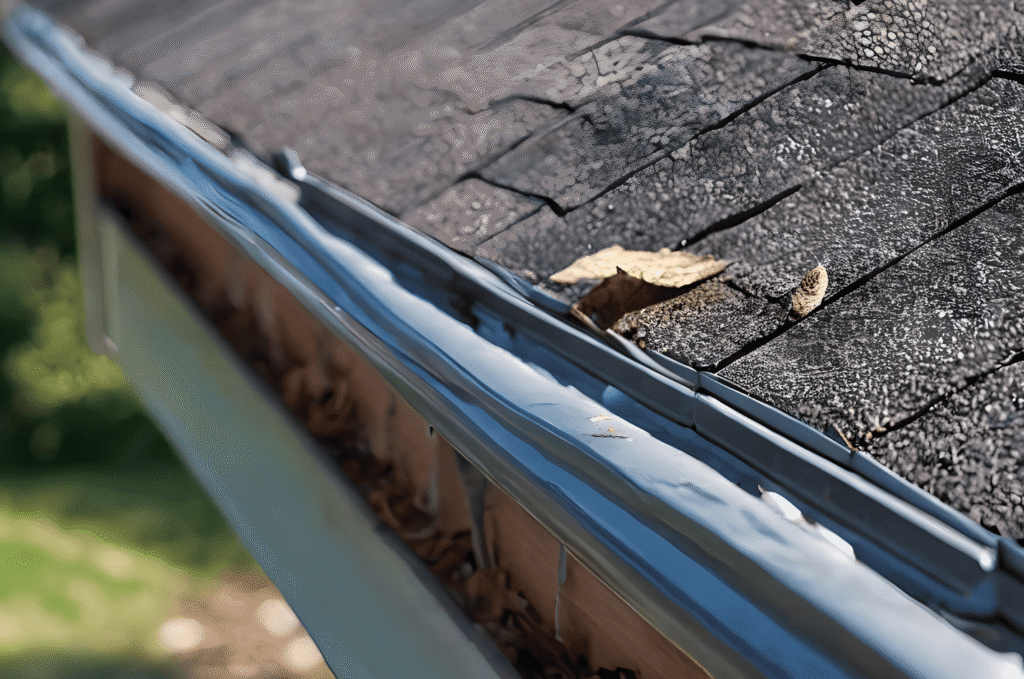
Clogged gutter problems don’t stay in one area. Water finds the path of least resistance, and that path often leads deep into your roof system. Left untreated, the damage compounds quickly across multiple roof layers.
Roof Deck Rot and Structural Failure
The roof deck is the plywood layer sitting directly under your shingles. When water backs up from clogged gutters and infiltrates the shingle layer, it soaks into the deck and causes rot, warping, and structural failure.
For homeowners dealing with roof damage in Boston, catching clogged gutter problems early is far cheaper than replacing a rotted deck later.
Flashing Failure at Roof Edges
Flashing is the metal sheeting at roof joints and edges that directs water away from vulnerable areas. When clogged gutters overflow, that water runs behind and under the flashing, exactly where it shouldn’t go, and seeps into the roof structure below.
Our guide on roof vs gutter leaks explains how to tell which system is actually causing the water intrusion you’re seeing inside your home.
Mold Growth in the Attic
Moisture entering through a compromised roof creates a perfect environment for mold on attic insulation, rafters, and sheathing. This is one of the more hidden signs of clogged gutter roof damage, often only found during a professional inspection.
Mold remediation is expensive and directly affects your home’s air quality, which is why catching clogged gutter problems early matters so much.
What Causes Clogged Gutter Damage to Worsen Over Time?
What causes clogged gutter damage to escalate is almost always neglect. A single season of blocked gutters won’t destroy your roof overnight, but two or three years of inadequate drainage turns every one of these problems into a major repair scenario.
Skipping Regular Gutter Cleaning
Most roofing professionals recommend cleaning gutters at least twice a year. Skipping this routine is the number one reason clogged gutter problems turn into roof damage.
Professional gutter cleaning service removes not just surface leaves but also the compacted sludge that builds up at gutter joints and downspout openings over time.
Improper Gutter Slope and Installation
Even clean gutters can cause roof damage if installed at the wrong angle. Gutters need a slight slope toward the downspout to keep water moving. Flat or reverse-sloped gutters hold standing water even after cleaning, creating the same clogged gutter roof damage without any debris blockage at all.
If your gutters always seem to hold water no matter how often they’re cleaned, the installation itself is likely the problem.
Downspout Blockages and Poor Drainage
A clogged downspout backs up the entire gutter system and forces water to overflow at multiple points along the roofline, even when the gutters themselves are clean. This sends water back onto your roof edge repeatedly.
The full relationship between your drainage system and roof health is covered in our pillar guide on gutter and roof drainage.
When to Call a Professional for Clogged Gutter Roof Damage
If you’ve spotted any of the warning signs above, it’s time to get a professional assessment. Some signs of clogged gutter roof damage look minor on the surface but point to significant structural issues below. At CAN Roof Construction, we recommend getting ahead of the problem before storm season rather than waiting for a visible leak.
After Any Major Storm or Heavy Rain
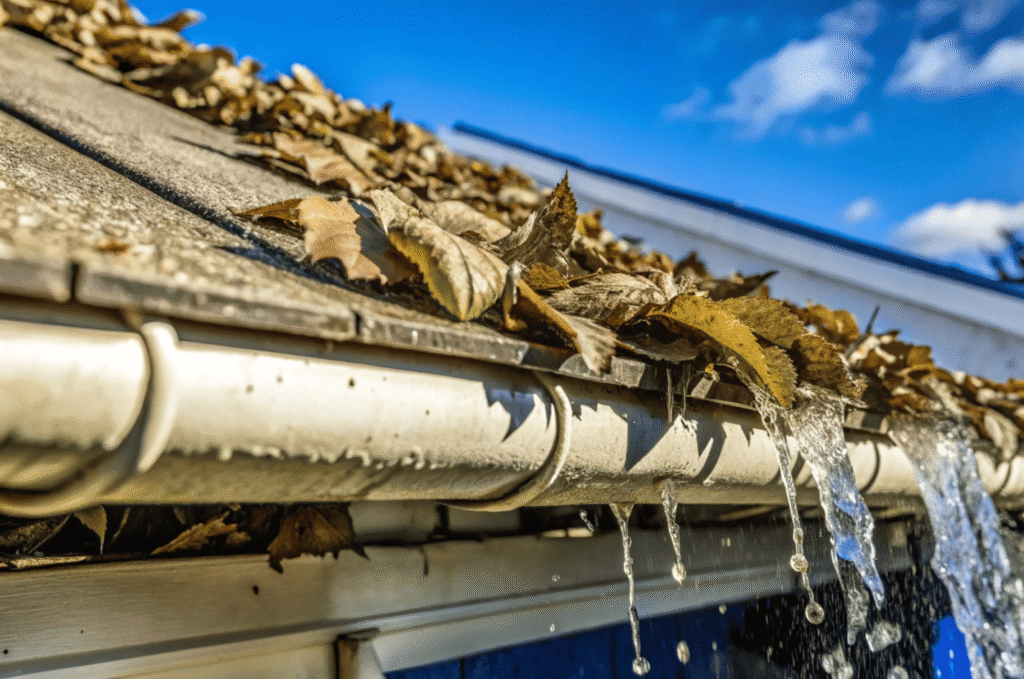
Heavy rain, wind, and ice are the most common triggers for accelerated clogged gutter damage. After a major storm, gutters can fill with debris in a single day and a partially clogged system can fail within hours.
Homeowners dealing with storm roof damage in Newton often trace the source back to gutters that were already partially blocked before the storm hit.
When Visible Damage Is Already Present
If you can see sagging gutters, water stains under the eaves, dark streaks on your siding, or granule deposits near downspouts, the damage has already started. Don’t climb on a wet roof or unstable ladder to investigate.
We’ve helped hundreds of Boston-area homeowners identify and fix clogged gutter damage before it becomes a full roof replacement. Our certified team handles everything from gutter assessments to full roof evaluations, starting with a free inspection.
If you’re seeing any of the warning signs above, don’t wait for the next rainstorm to make things worse. Contact our team and get your free professional evaluation today.