
Flat Roof Drainage Solutions: How to Avoid Ponding Issues?
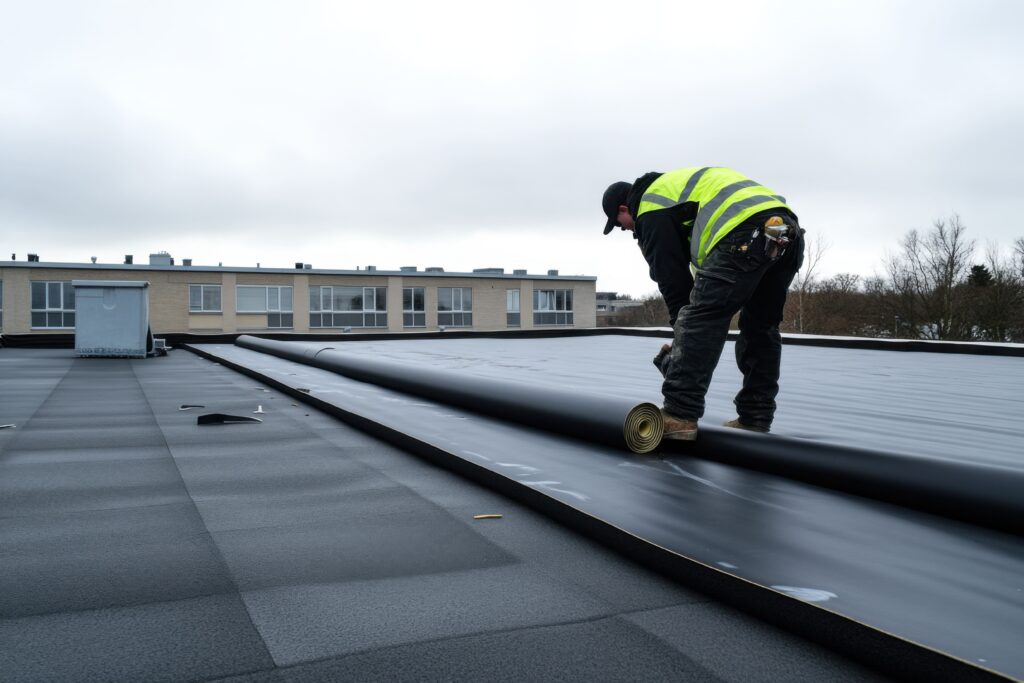
Ponding repair ranks among the most critical maintenance concerns for property owners with flat roofing systems. When water pools on your roof for more than 48 hours after rainfall, you’re facing a flat roof drainage issue that demands immediate attention.
Today we will explore everything you need to know about flat roof drainage systems, common causes of ponding, and proven solutions that deliver lasting protection. So understanding your options will empower you to make informed decisions.
Table of Contents
What is the Problem with Flat Roof Drainage?
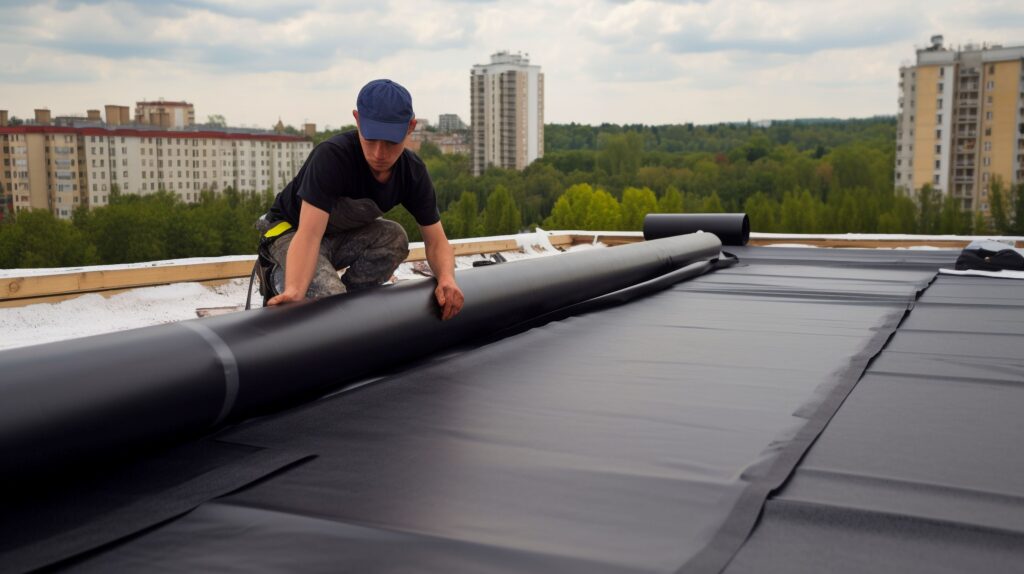
Unlike pitched roofs that naturally shed water, flat roofs depend entirely on properly designed and maintained flat roof drainage systems to move water off the surface. When these systems fail or prove inadequate, roof drain ponding becomes inevitable.
Common causes of flat roof drainage issues include:
- Improper Roof Slope: Flat roofs require a minimum slope of 1/4 inch per foot to direct water toward drains. Inadequate slope creates low spots where water collects.
- Clogged Drains and Strainers: Debris accumulation in your flat roof drain strainer blocks water flow, causing backup and ponding across the roof surface.
- Structural Settling: Buildings naturally settle over time, creating depressions in the roof deck that weren’t present during original construction.
- Membrane Deflection: Heavy equipment, foot traffic, or snow loads can compress insulation and create permanent low areas on rubber roof drain systems.
- Inadequate Drain Placement: Drains positioned incorrectly or in insufficient numbers cannot handle water volume during heavy rainfall.
How to Fix Drainage on a Flat Roof: Proven Solutions
Effective ponding repair requires identifying the root cause and implementing appropriate solutions. Professional flat roof drainage repair addresses not just symptoms but underlying problems that cause water accumulation.
1. Regular Drain Maintenance and Strainer Cleaning
The simplest solution often delivers the biggest impact. Your flat roof drain strainer requires regular inspection and cleaning to function properly. Leaves, debris, and sediment accumulate quickly, especially during fall months in the Hamilton area. Establishing a maintenance schedule that includes quarterly drain cleaning prevents most minor ponding issues before they develop.
2. Installing Additional Drains or Scuppers
When existing drains cannot handle water volume, adding supplementary drainage points solves the problem permanently. Scuppers, openings in the parapet wall that allow water to exit- provide excellent secondary drainage. Interior drains positioned in identified low spots capture water that would otherwise pond. Professional assessment determines optimal placement for maximum effectiveness.
3. Tapered Insulation Systems
Tapered insulation creates a positive slope on flat roofs where structural modifications aren’t feasible. This solution involves installing rigid foam insulation boards of varying thickness to direct water toward drains. Beyond solving drainage problems, tapered insulation improves energy efficiency by adding R-value to your roofing system. This approach works exceptionally well during rubber roof drain installations or when replacing aging flat roof membranes.
4. Cricket or Saddle Installation
Crickets are raised sections of roofing that divert water around obstacles or toward drains. Installing crickets behind HVAC units, around skylights, or in areas prone to ponding redirects water flow without major structural work. This targeted solution addresses specific problem areas while integrating seamlessly with existing flat roof drainage systems.
5. Membrane Repair and Coating
Specialized coatings can fill minor depressions while waterproofing the surface. Self-leveling compounds work well for shallow ponding areas on EPDM, TPO, and PVC membranes. These residential roof repair solutions provide cost-effective ponding repair when the underlying structure remains sound but surface irregularities cause water retention.
What is the Best Way to Repair a Leaking Flat Roof?
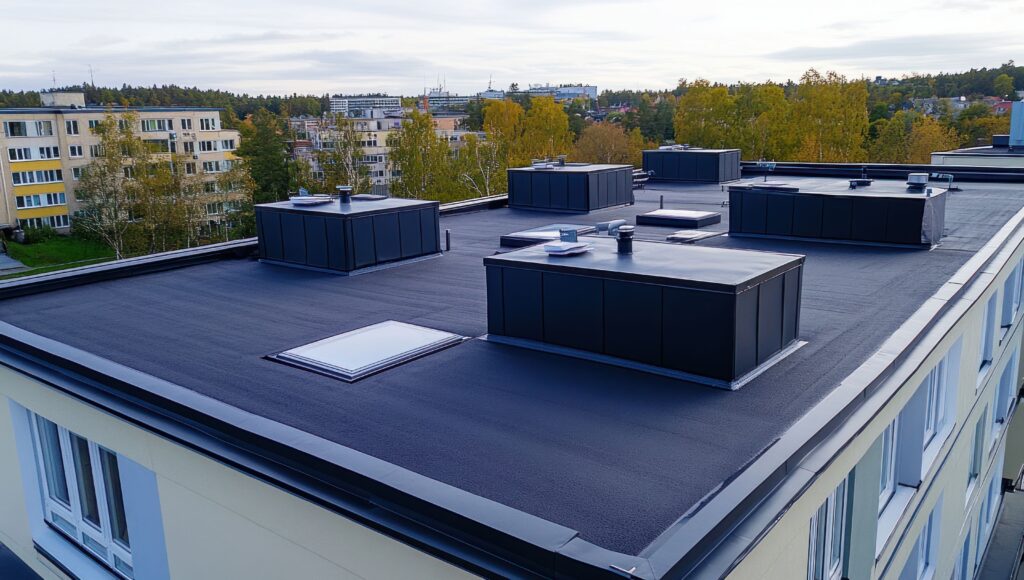
When ponding leads to leaks, addressing both the drainage issue and the damage becomes essential. The best approach depends on your specific situation, roofing material, and the extent of deterioration.
For EPDM (rubber) roofs: Patch damaged areas with compatible membrane material and adhesive. For significant damage, professionals may recommend a complete rubber roof drain system overhaul that includes new flashing and edge details.
For TPO and PVC membranes: Heat-welded patches provide seamless, watertight repairs. These materials excel in flat roof applications because seams can be welded to eliminate leak pathways.
For modified bitumen systems: Torch-applied or self-adhering patches address localized damage. Multiple layers provide redundant waterproofing protection.
Professional assessment determines whether repair or replacement delivers better long-term value.
Preventing Future Flat Roof Drainage Issues
Proactive maintenance prevents most ponding problems and extends flat roof lifespan significantly. Implementing these practices protects your investment and avoids costly emergency repairs.
Essential prevention strategies:
- Schedule Regular Inspections: Professional inspections twice yearly; spring and fall, identify developing problems before they cause damage
- Clean Drains and Gutters: Remove debris from your flat roof drain strainer and connected gutters quarterly or after major storms
- Address Minor Issues Promptly: Small repairs today prevent expensive replacements tomorrow
- Document Problem Areas: Photograph ponding locations after rain to help contractors identify patterns
Why Professional Flat Roof Repair Matters
The complexity of properly diagnosing drainage problems, selecting appropriate solutions, and executing roof repairs that last requires specialized knowledge and equipment.
Professional construction brings distinct advantages to your drainage project:
- Certified Expertise: GAF and CertainTeed certifications ensure our team understands proper techniques for all flat roofing materials
- 10-Year Warranty: We stand behind our work with comprehensive warranty protection
- Local Knowledge: Understanding Boston’s climate helps us design flat roof drainage systems that handle New England weather
- 5-Star Reputation: Over 90 Google reviews confirm our commitment to quality and customer satisfaction
Solve Your Flat Roof Drainage Problems Today
Ponding water doesn’t resolve itself, it only gets worse. Every day standing water remains on your flat roof accelerates deterioration and increases eventual repair costs. But professional solutions exist that restore proper function and protect your property.
Don’t wait for leaks to damage your building’s interior. Contact CAN Roof Construction today to schedule your FREE flat roof inspection.