
Commercial Roofing Problems Business Owners Should Fix Early
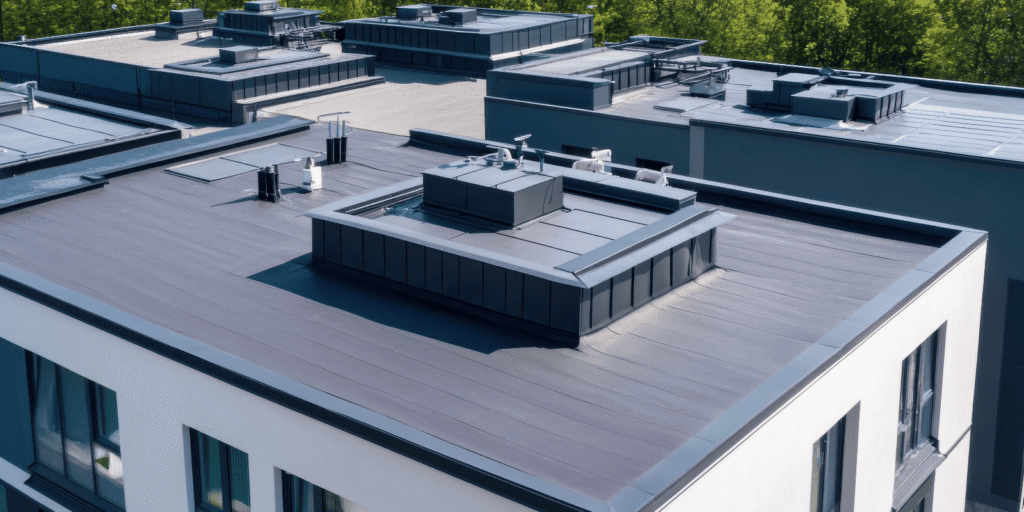
Commercial roofing problems should be fixed early because small punctures, clogged drains, weak seams, and damaged flashing can quickly turn into leaks, wet insulation, and interior water damage. For business owners, the risk is not only the roof surface. A small issue can affect inventory, equipment, tenants, staff areas, and daily operations.
Commercial roofing problems often start quietly. A small stain, soft membrane area, loose seal, or slow drain may not look urgent, but it can point to a larger roof condition that needs attention before the next storm.
Table of Contents
Commercial Roofing Problems That Start With Roof Drainage Problems
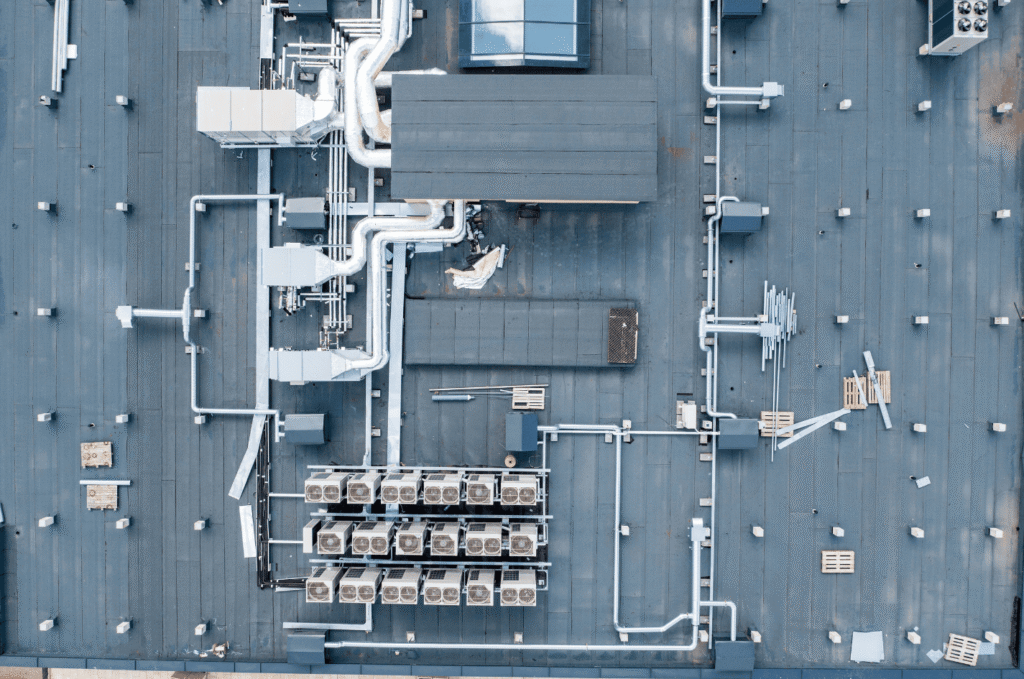
Commercial roofing problems often begin with roof drainage problems, especially on flat and low-slope roofs. When water cannot move toward drains, scuppers, or downspouts, it sits on the surface and adds stress to the roof system.
Standing water can weaken seams, expose membrane defects, and make small commercial roof problems spread faster. Business owners should treat drainage patterns as an early warning sign, not just a surface issue.
Ponding Water Can Weaken Flat Roof Areas
Ponding water happens when rain stays on the roof instead of draining away. If it remains after normal drying time, it may point to poor slope, blocked drains, or sagging roof sections.
Once published, the future ponding water guide can help explain why standing water is one of the commercial roofing problems business owners should not ignore.
Clogged Drains Can Push Water Into Weak Spots
Commercial roofs often rely on internal drains, scuppers, and downspout paths to move water away. When debris blocks those areas, water can collect around seams, curbs, and roof edges.
For properties with recurring drainage concerns, flat roofing services can help review low-slope roof areas, membrane performance, and drainage-related leak risks.
Roof Edges Can Show Early Warning Signs
Water marks near parapet walls, edge metal, or exterior wall lines may show that drainage is not working evenly. These areas can reveal commercial roofing problems before water reaches the interior.
For Cambridge businesses, older buildings and tight roof layouts can make drainage details especially important after heavy rain.
Commercial Roof Problems Around Flashing, Seals, and Curbs
Commercial roof problems often form around the places where the roof has openings or transitions. HVAC units, vents, pipes, parapet walls, skylights, and roof edges all need strong seals to keep water out.
These areas move, expand, and contract through seasonal weather. When flashing lifts or seals crack, commercial roofing problems can appear even if the main roof field still looks solid.
Flashing Protects Roof Penetrations
Flashing helps seal vulnerable points where equipment, walls, or penetrations meet the roof surface. If it loosens, rusts, cracks, or separates, water can bypass the roof membrane and enter below.
This is one reason commercial roof inspection Boston support should include roof curbs, pipe boots, vent bases, and edge details, not only the wide open roof surface.
Damaged Seals Can Let Water Travel
A small gap in sealant can let water move under the membrane before a leak becomes visible inside. That makes commercial roofing problems harder to trace from the ceiling stain alone.
If the issue appears near HVAC equipment, roof edges, or wall transitions, the future commercial leak guide can support readers comparing surface signs with hidden water entry.
Commercial Roof Leaks Boston Businesses May Miss
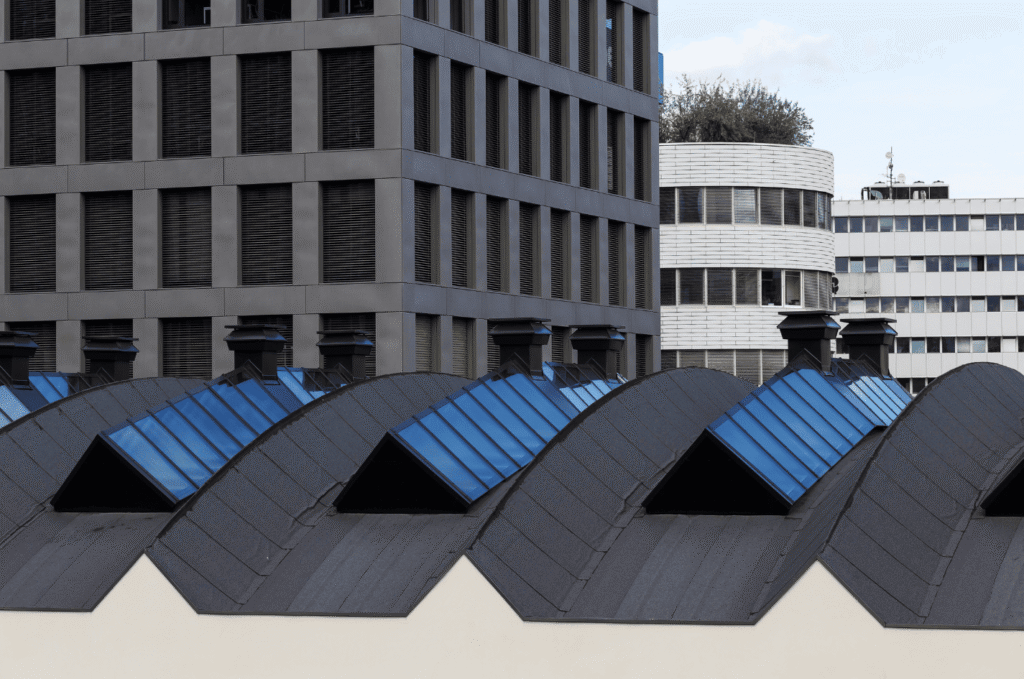
Commercial roof leaks Boston business owners notice inside the building may have started long before the first drip. Water can enter through a small puncture, travel through insulation, and appear far from the original opening.
That delay is why commercial roofing problems should be reviewed when early signs appear. A stain, odor, soft ceiling tile, or damp insulation can all suggest the roof needs attention.
Punctures Can Stay Hidden Under Foot Traffic
Commercial roofs often carry HVAC technicians, maintenance workers, tools, and equipment. Foot traffic or dropped tools can puncture TPO, EPDM, or other membrane systems without creating an immediate visible leak.
If punctures, seam issues, or roof leak repair concerns appear, roofing services can help connect commercial roof repair, inspection, and repair planning in one roof system.
Wet Insulation Can Delay Visible Leaks
When water reaches insulation, it may spread before dripping into the building. That can make commercial roof leaks Boston businesses experience seem sudden, even though moisture has been building for some time.
For East Boston properties, wind, rain exposure, and older roof details can make early leak tracking important for protecting interior spaces.
Interior Stains Should Not Be Ignored
Ceiling stains, musty smells, damp tiles, and localized wall marks can all point to commercial roofing problems. Even if the stain is small, the roof area above may have a wider moisture path.
A careful review can help separate an active roof leak from condensation, plumbing, or wall-related water issues.
Commercial Roof Inspection Boston Signs to Check Early
Commercial roof inspection Boston support is useful when early signs are unclear. The goal is to find the source before water affects larger roof sections, insulation, decking, or interior materials.
Inspection also helps business owners understand whether the issue is drainage, punctures, flashing, membrane wear, or maintenance-related damage.
Shrinkage and Blistering Can Stress the Membrane
UV exposure, temperature swings, and age can cause roofing materials to shrink, blister, split, or crack. These commercial roof problems can pull at seams and weaken the protective surface.
For Newton facilities, larger roof planes can make membrane movement and surface wear harder to notice from the ground.
Drainage Patterns Should Be Reviewed After Rain
After rain, repeated puddles, stained roof paths, or water collecting near drains can point to roof drainage problems. These signs matter because water adds weight and increases stress on seams and flashing.
Once published, the future flat drainage guide can help business owners understand how low-slope drainage affects commercial roof maintenance.
Utility Changes May Point to Wet Insulation
Rising heating or cooling demand can sometimes connect to wet or damaged roof insulation. When insulation absorbs moisture, it may lose performance and signal hidden water entry.
For Quincy buildings, coastal weather and heavy rain patterns can make moisture checks important when commercial roofing problems repeat.
Commercial Roof Maintenance and Commercial Roof Repair Boston Support
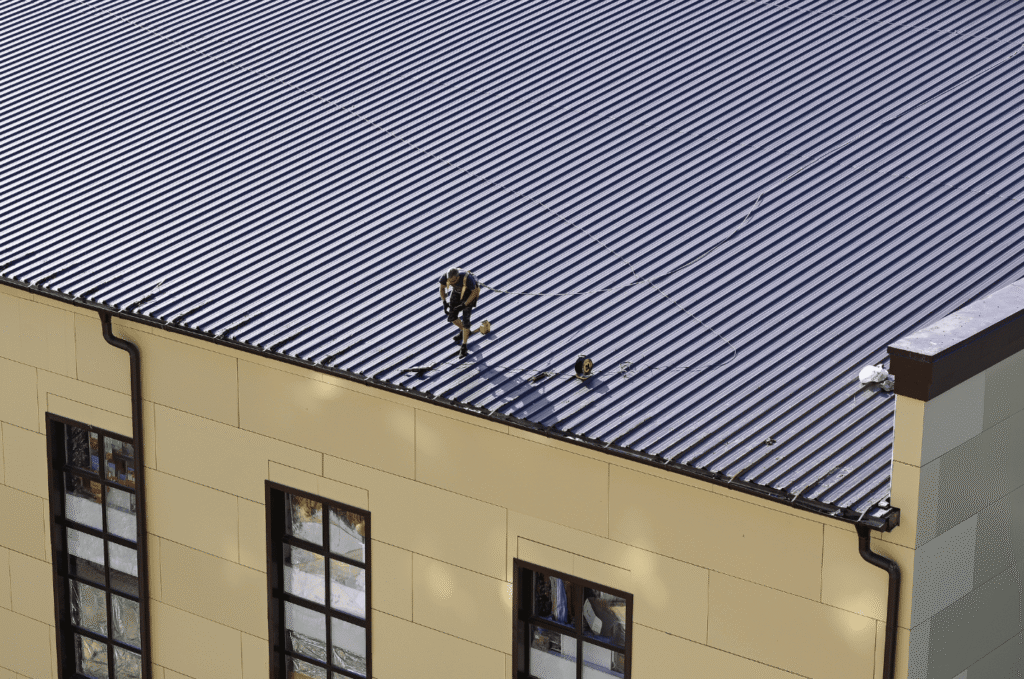
Commercial roof maintenance helps business owners catch small issues before they interrupt operations. It should include roof surface checks, drainage review, flashing evaluation, and attention to areas around rooftop equipment.
Commercial roof repair Boston support becomes more important when signs return after rain or appear in multiple parts of the building. Early repair planning can help avoid larger disruption later.
Maintenance Should Focus on the Highest-Risk Areas
The most vulnerable commercial roof areas are often drains, seams, roof curbs, flashing, penetrations, and places with repeated foot traffic. These spots should be watched closely because small defects can expand quickly.
Commercial roofing Boston property owners can reduce risk by reviewing these areas before heavy rain seasons and after major weather events.
Local Support Can Help Protect Business Property
Near the end of the process, business owners can visit CAN Roof Construction to learn more about local roofing support from a team familiar with Boston roof conditions.
Commercial roofing problems are easier to manage when the roof is reviewed as a full system, including drainage, membrane condition, flashing, insulation, and repair needs.
Schedule a Careful Commercial Roof Check
If you notice standing water, stains, roof membrane damage, loose flashing, or repeated moisture signs, do not wait for the issue to spread. A careful review can show whether the problem needs maintenance, repair, or a deeper inspection.
To protect your building before small roof issues become larger concerns, contact us today and schedule a professional commercial roof inspection.