
Commercial Roofing Services Overview: Roof Types to Choose
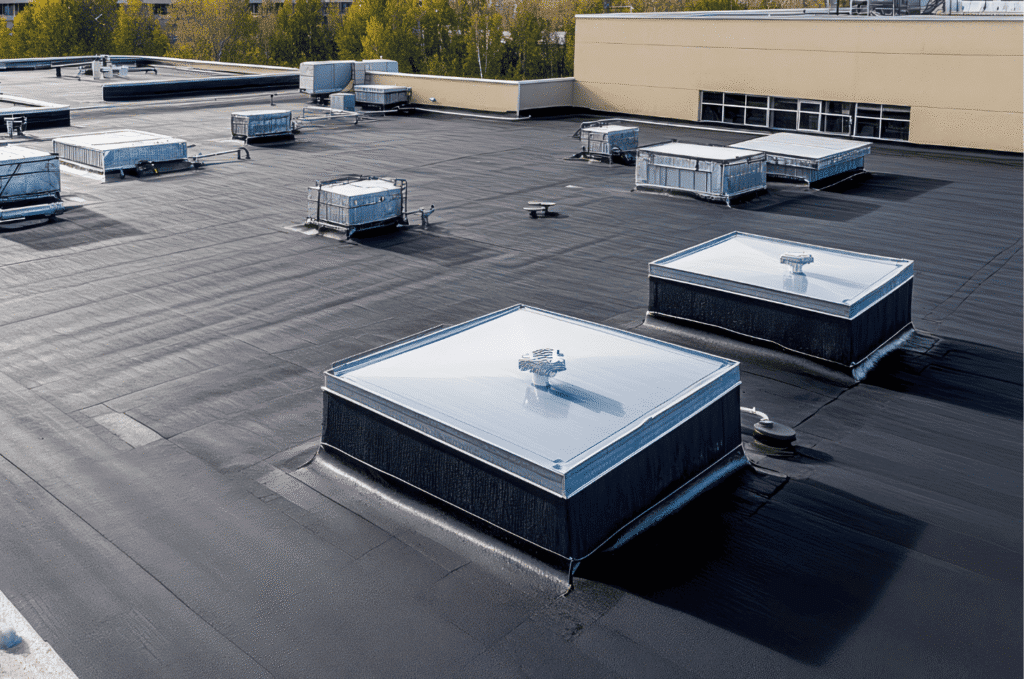
Unlike residential properties, commercial buildings face unique demands that require specialized commercial roofing solutions designed for larger surface areas, heavier equipment loads, and extended service life.
This guide helps you to understand the most common commercial roof types, breaks down the best commercial roofing material options for different applications, and explains what property managers and business owners need to know about commercial roof construction and insurance requirements.
Table of Contents
Why Commercial Roofing Requires Specialized Expertise
Commercial roofing presents challenges that residential projects simply do not encounter. The scale of commercial buildings, combined with their functional requirements, demands roofing systems engineered for performance under demanding conditions. Understanding these differences helps explain why commercial roofing service requires contractors with specific expertise and certifications.
Key factors that differentiate commercial roofing include:
- Larger surface areas: Commercial roofs span thousands of square feet, requiring seamless waterproofing and efficient drainage systems
- Equipment accommodation: HVAC units, ventilation systems, and other rooftop equipment require proper flashing and structural support
- Low-slope design: Most commercial buildings feature flat or low-slope roofs that demand specialized materials and installation techniques
- Business continuity: Commercial roof construction must minimize disruption to ongoing business operations
- Code compliance: Commercial buildings face stricter fire ratings, energy efficiency requirements, and safety regulations
Types of Commercial Roof: Your Options
Selecting the right commercial roof type depends on your building’s design, budget, climate exposure, and long-term maintenance expectations. The most common commercial roof types each offer distinct advantages that suit different applications. Let us explore the three primary commercial roofing types that dominate the Boston market.
Flat Commercial Roof Systems
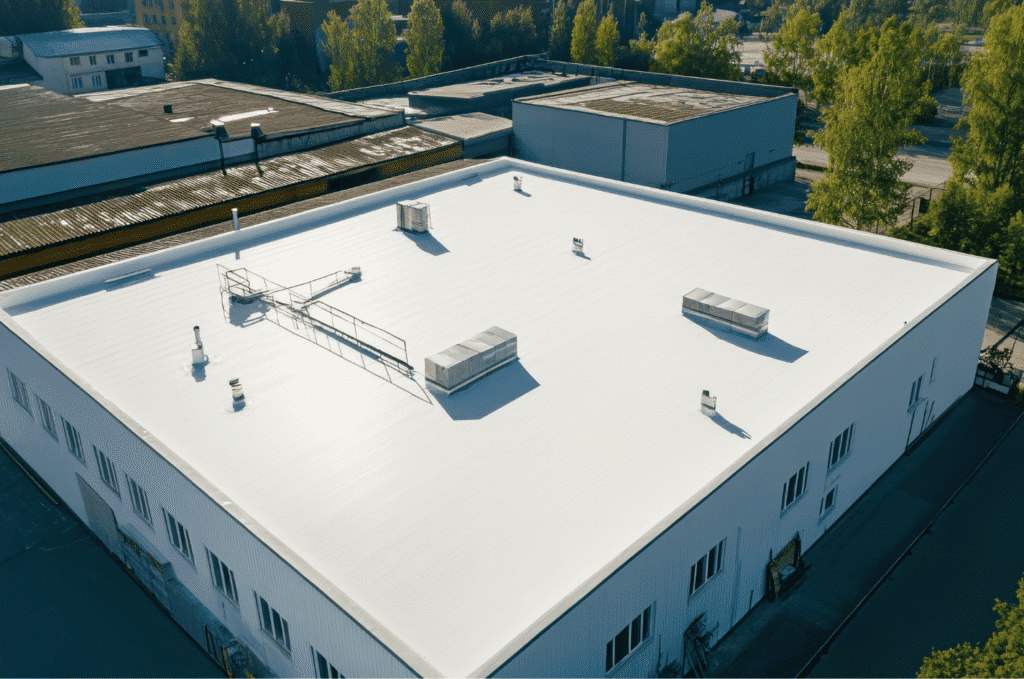
The flat commercial roof remains the most common commercial roof type for warehouses, shopping centers, office buildings, and industrial facilities throughout Massachusetts. Despite being called flat, these roofs actually maintain a slight slope to facilitate drainage. Flat roofing systems use specialized membranes designed to create seamless, waterproof barriers across large surface areas.
Popular flat commercial roofing materials include:
- EPDM (Ethylene Propylene Diene Monomer): This synthetic rubber membrane offers exceptional durability, UV resistance, and flexibility. EPDM systems can last 40+ years with proper maintenance, making them among the best commercial roofing material choices for cost-conscious property owners.
- TPO (Thermoplastic Polyolefin): A highly reflective membrane that reduces cooling costs by reflecting solar heat. TPO resists punctures, chemical exposure, and UV damage while providing energy-efficient performance ideal for Boston’s varied climate.
- PVC (Polyvinyl Chloride): The premium choice for commercial properties requiring superior fire resistance and chemical resistance. PVC membranes excel in restaurants, manufacturing facilities, and buildings with rooftop grease or chemical exposure.
- Modified Bitumen: A reinforced asphalt-based system offering excellent waterproofing, impact resistance, and flexibility. Modified bitumen provides reliable performance at a competitive price point.
Metal Commercial Roofing
Metal roofing systems have grown increasingly popular for commercial applications, offering unmatched longevity, fire resistance, and aesthetic versatility. Modern metal commercial roofing comes in standing seam panels, corrugated sheets, and architectural metal tiles that suit everything from industrial buildings to upscale retail centers.
Advantages of metal commercial roofing:
- 50+ year lifespan: Properly installed metal roofs outlast most other commercial roofing materials by decades
- Superior fire resistance: Metal carries Class A fire ratings, the highest classification available
- Energy efficiency: Reflective coatings reduce heat absorption and lower cooling costs significantly
- Snow shedding: Metal’s smooth surface allows snow to slide off, reducing structural loads in Quincy winters
- Material options: Steel, aluminum, copper, and zinc each offer different aesthetic and performance characteristics
Built-Up Roofing Systems
Built-up roofing, often called tar and gravel roofing, represents one of the oldest and most proven commercial roofing types still in widespread use today. BUR systems create multiple redundant waterproofing layers by alternating asphalt or coal tar with reinforcing fabrics, then topping with gravel or mineral cap sheets.
This time-tested approach to commercial roof construction delivers exceptional waterproofing through layer redundancy; if one layer fails, others continue protecting the building. Built-up roofing particularly suits buildings that require outstanding durability and can accommodate the weight of gravel surfacing. The gravel layer protects underlying materials from UV damage and provides additional fire resistance.
While BUR systems require experienced installers and produce more fumes during installation, they remain among the most reliable commercial roofing materials for long-term waterproofing performance.
Selecting the Best Commercial Roofing Material for Your Building
No single commercial roofing material suits every application. The best commercial roofing material for your building depends on several factors that experienced contractors evaluate during the consultation process.
Consider these factors when choosing commercial roofing materials:
- Building use and exposure: Restaurants need grease-resistant materials; manufacturing facilities may require chemical resistance; retail properties prioritize aesthetics
- Roof slope and drainage: Different materials suit different slopes and drainage configurations
- Energy efficiency goals: Reflective membranes and cool roof coatings reduce cooling costs substantially
- Budget and lifecycle costs: Lower upfront costs may mean higher long-term expenses; evaluate total cost of ownership
- Maintenance requirements: Some systems require more frequent inspection and maintenance than others
- Local climate: Boston’s freeze-thaw cycles, heavy snow, and nor’easters demand materials engineered for extreme conditions
Commercial Roof Types for Insurance: What Property Owners Should Know
Your commercial roof type directly impacts insurance premiums, coverage options, and claim outcomes. Insurance companies evaluate commercial roof types based on age, material, condition, and expected remaining lifespan when determining rates and coverage terms.
Insurance considerations for commercial roofing:
- Fire ratings: Class A fire-rated materials like metal and properly installed membrane systems typically qualify for lower premiums
- Wind resistance: Roofs rated for high wind speeds may reduce premiums in coastal Massachusetts communities
- Age and condition: Roofs older than 20 years may face coverage limitations or higher deductibles
- Impact resistance: Materials rated for hail and impact damage can lower premiums in areas prone to severe weather
- Maintenance documentation: Regular inspections and documented maintenance history support claims and demonstrate responsible ownership
Maintaining proper documentation of commercial roofing inspections, repairs, and warranties, protects your interests when filing claims and can demonstrate the care required to maintain coverage.
Regional Considerations for Commercial Roofing in Boston
The Boston metropolitan area presents unique challenges for commercial roofing that contractors must address through proper material selection and installation techniques. Understanding these regional factors helps ensure your commercial roof performs reliably year after year.
Climate Challenges
Massachusetts commercial buildings face heavy winter snowfall that creates substantial weight on roofing structures, demanding proper drainage design and structural support. Freeze-thaw cycles stress roofing materials throughout winter and spring, while powerful nor’easters test wind resistance and waterproofing integrity. Summer heat and UV exposure accelerate aging in materials not designed for extreme temperature swings.
Urban and Industrial Factors
Commercial properties in Holliston’s urban core face access challenges that affect material delivery and installation logistics. Industrial areas may expose roofs to chemical fallout or grease exhaust requiring resistant materials.
Building Code Requirements
Massachusetts building codes establish minimum standards for commercial roof construction, including fire ratings, wind resistance, and energy efficiency requirements. Boston and surrounding communities enforce these codes through permit requirements and inspections. Working with contractors who understand local code requirements ensures compliant installations that pass inspection.
Trust CAN Roof Construction for Expert Commercial Roofing Service
Understanding commercial roofing types from flat membrane systems to metal panels and built-up roofing empowers you to make informed decisions about protecting your commercial property. The right commercial roofing material, properly installed by certified professionals, delivers decades of reliable protection while supporting your insurance requirements and operational needs.
CAN Roof Construction delivers comprehensive commercial roofing service throughout the greater Boston area. Our 5-star rated team brings the expertise, certifications, and commitment to quality that commercial property owners and managers require.
Ready to build your commercial property? Schedule Your Commercial Roofing Consultation Today.